Jump to content

Recommended Posts

Hello All.


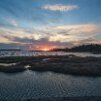
I have always been obsessed with capturing the night sky (who isn't). Im relatively new to the fuji system and the following are two images I made recently. I live in Southern Connecticut and am frankly surprised at how much the combination of the X-T1 and the rokinon 12mm can see.


Camera Settings: Long exposure noise reduction on / RAW / used fuji camera remote app for iOS


Partial Milky Way Shot: 2000 ISO / F2.8 / 15sec


Perseid Meteor Shower Shot: 1250 ISO / F2.0 / 15sec


Both processed in Lightroom CC.


I would love to hear the communities comments on things I can do (camera settings) to get better shots. I'm mostly concerned about noise.


Welcome, dear visitor! As registered member you'd see an image here…

Simply register for free here – We are always happy to welcome new members!


Link to post
Share on other sites

You cannot stack multiple long-exposure shots if you want stars that are pinpoint sharp.


The world is spinning.  Depending on your focal length, 15-30 seconds is the longest exposure you can capture before stars start to streak.  The wider the lens (12 mm is a great starting point), the more time you have to work with.


See "Selecting Exposure Time" in this article:

http://petapixel.com/2014/03/28/prep-work-post-processing-depth-star-photography-tutorial/


In theory you could stack multiple short exposures if they were all taken within the time allowed by the 500 Rule, but the result would be underexposed and the resulting improvement in noise may or may not be worth it.


To reduce noise, make sure long-exposure noise reduction is turned on, and experiment with the longer shutter speeds until the stars are no longer sharp.  More light collected = less noise.

Link to post
Share on other sites

I'm getring into astrophotography aswell. Google something called "DeepSkyTracker" and this software will let you stack your photos and allign the "stars" (lights) making up for earth's rotation.


Again I'm getting into it aswell.. For tutorials on stacking search google like I did :). Good luck and share your good finds too please :).

Link to post
Share on other sites

Would you mind briefly going over the steps?

Stacking is basic function for every HDR software, Photomatix for example. 
Photoshop also do stack, for my version CC 2015 it's very simple: Files -> Scripts -> Load files into stack.
Another Photoshop way is more tricky: File -> Automate -> Photomerge -> open files to be stacked. In fact, this Photoshop script make panorama from opened files, but because we take files with the same scene, the result will be not panorama but copy of scene with some averaging of stacked pixel luminosity, so it works as denoiser.
Link to post
Share on other sites

One picture taken with my new Fuji X-T10 and 18-55mm f/2.8-4

Welcome, dear visitor! As registered member you'd see an image here…

Simply register for free here – We are always happy to welcome new members!

Link to post
Share on other sites

Quite like the pictures - very nice - though I have to say that I believe the "meteor" in your image is more a satellite orbiting the earth than a meteor. Meteors are more colourful. The perseids I managed to shoot are all green to orange colour. 


On a related note:


What techniques are you using to manually focus ?


I am talking about lenses like the XF 16 mm WR where there is a difference between setting the lens to "infinity" and the actual "inifinity" where stars are sharp. 

Typically under dark skies you barely can see any star anyway. So far I have been using "trial and error" for a few shots until I was happy with the result. Still sometimes it turns out that the pictures when viewed the other day were not 100 % sharp. 


I know there is a lot of techniques you can find on the internet - just wondering here what works for you.. Others are happy to chime in, too. 

Link to post
Share on other sites

Despite the topic, this isn't really X-T1 specific thread. Might be useful to move this to more appropriate area. Although I'm not sure which one that would be.


There's really no magical way to get rid of the noise. Increasing the exposure time and stacking exposures will help in getting rid most of it. Noise reduction algorithms will always remove some of the dimmer stars, but usually isn't really a problem since those faint stars wouldn't be visible in the final image anyway.


I doubt anyone here can give you better advice than what can be found from a number of different online tutorials, such as (these are in some kind of order, just don't ask me what it is):

http://www.lonelyspeck.com/

http://www.astropix.com/index.html

http://theartofnight.com/2014/06/the-art-of-astrophotography-tutorial/

http://www.astro-imaging.com/Tutorial/PixInsight/M33/en.html (processing tutorial)

https://www.reddit.com/r/astrophotography/comments/2acnqb/the_great_list_of_astrophotography_software/ (software list)

http://www.deepskycolors.com/

http://www.skyandtelescope.com/astronomy-resources/astrophotography-tips/

http://www.astropix.com/HTML/I_ASTROP/toc_ap.html

https://photographylife.com/astrophotography-tutorial


Few other useful links:

http://app.photoephemeris.com/

http://www.lightpollutionmap.info/

http://www.blue-marble.de/nightlights/2012 (and the rest of the blue marble site) 

Link to post
Share on other sites

FWIW I find LR to be extremely useful at pumping up stars even with out PS. The "Detail" block (noise reduction/sharpening) is very useful and giving it time and trying things makes a big difference. As already said any NR is going to take out some of the smaller stars, but it can also significantly reduce the noise in the darkness, so you need to figure out the Goldilocks sweet spot where the noise isn't distracting but you still have all the important (i.e. obviously-not-noise) stars visible.


I've also been shocked at how much tweaking white balance makes a difference, especially local adjustments to give sky and foreground different white balances since they are lit completely differently from each other. 


Here's a shot I took in Bohol, Philippines with my X-E1 and 18-55mm (haven't had a good chance to use my X-T10+16mm yet unfortunately, it was cloudy when I was in the country last weekend):


Welcome, dear visitor! As registered member you'd see an image here…

Simply register for free here – We are always happy to welcome new members!

Link to post
Share on other sites

  • 8 months later...

Focus stacking is what is used when you want to make star trails.


For pinpoint stars, you just need to 1) shoot high iso  2) shoot wide open with fast glass  3) post process for noise.


I did my first stint of astrophotography last month in Hawaii. I used the XT-1 and the 14 2.8. Shots are at ISO6400, f2.8, 15 or 20 sec. Any more than 20seconds and the stars start to trail too much. I think with the 12mm you might be able to get away with 30s but I haven't tried it.


ISO6400 isn't ideal, you have to push the noise processing, but LR gets the job done. Looking forward to getting another stop with the XT-2!

Link to post
Share on other sites

These shots were my first attempts at doing real astrophotography. I was super inspired by the super dark skies up at 11000 feet on the volcano. The 14 was a little limiting however. I'm now looking at the Rokinon 12mm f2 for next time. The extra stop would be useful as well as the extra width. It was really hard to get the trees and much of the Milky Way in the shot with only a 21mm equivalent focal length.


Oh, BTW, the shot that appears to be a sunset ... it isn't. When have you seen the stars above a sunset? ;-) ;-)


Hawaii%20Big%20Island%202016-40-L.jpg


Hawaii%20Big%20Island%202016-43-L.jpg


Hawaii%20Big%20Island%202016-71-L.jpg


Hawaii%20Big%20Island%202016-72-L.jpg

Edited by stevezphoto
Link to post
Share on other sites

Just curious how you made sure it was in focus?  I found the EVF hard to focus with in complete darkness at high ISO - just too much noise.  For me with the X-T1 it was shoot, adjust and shoot again until I got the focus right.  Do you find these issues?


Great shots, BTW.

Link to post
Share on other sites

Yes, focus is tricky. For the shots with trees I use a flashlight to put enough light on the subject to use focus peaking.


I am a new at this so I also did focus bracketing once I was close to then pick the best one.

Link to post
Share on other sites

  • 2 weeks later...
  • 2 weeks later...

Steve, great photos! I just can recommend the Rokinon 12mm f2 for milky way shoots. It is a very simple (manual focus only) but brilliant lens. You will receive great value. I also use the Rokinon for star shooting. I think it just give me the perfect aspect ratio for milky way (very wide, but not too wide). Also, it is really sharp and very easy to handle. What I also recommend to get the last piece of perfection for your star shooting, is the iOptron Star tracker. It allows me to do 4-5 minutes exposures, while closing the lens to f/4 and stepping down the ISO values to ISO800. It requires to do two separate images (one for the background, one for the foreground), because the skytracker will move the camera.


You can see some examples here:

https://goo.gl/photos/HQgbLQB6ctZM12qd8

https://goo.gl/photos/b5Mqdk2PjvAXGbRz6


These shots were my first attempts at doing real astrophotography. I was super inspired by the super dark skies up at 11000 feet on the volcano. The 14 was a little limiting however. I'm now looking at the Rokinon 12mm f2 for next time. The extra stop would be useful as well as the extra width. It was really hard to get the trees and much of the Milky Way in the shot with only a 21mm equivalent focal length.


Oh, BTW, the shot that appears to be a sunset ... it isn't. When have you seen the stars above a sunset? ;-) ;-)


Hawaii%20Big%20Island%202016-40-L.jpg


Link to post
Share on other sites

Create an account or sign in to comment

You need to be a member in order to leave a comment

Create an account

Sign up for a new account in our community. It's easy!

Register a new account

Sign in

Already have an account? Sign in here.

Sign In Now
  • Similar Content

  • Posts

    • Ahh, the infamous brick wall photos… 😀 According to internet lore, if the dng converter does not properly apply the corrections, you can have it apply custom profiles that should work for you. How to do that is waaaaaay outside of this comment’s scope, but there are plenty of sites listed in the search engines that step you through the processes. Best wishes.
    • Jerry Thank you very much. That is extremely helpful. It seems that the camera and the lens have the latest firmware update, so it appears that the corrections should be applied automatically. The lens arrived this afternoon and I took some quick test shots, in which the correct lens information appeared in the EXIF files, so that sounds good. I used Adobe DNG converter to convert the Raw (RAF) files, and then opened the DNG files and saved them in PSD format. However, with a beautiful, clear, cloudless blue sky, there were no lines near the edges to check if distortion had been corrected. Another day I plan to photograph a brick wall. Thank you for your help.
    • Typically you need to make sure the lens is compatible with the camera, i.e. check the lens compatibility charts for your camera, then make sure the respective firmwares are updated so older issues are resolved. After that, each lens has a manufacturer’s profile which will be embedded into the raw file meta data for the images captured using that lens. From there, it is up to the raw conversion software to apply the lens correction to the image. Different converters do that differently, some automatically, some only if a setting is turned on. For in-camera jpegs, the on-board converter does the corrections automatically, assuming the camera recognizes the lens, it applies a generic profile otherwise. I do not know if that can be turned off or not.
    • How does one make sure that Fuji's image correction is turned on to correct barrel and pin-cushion distortion on a GFX 100 or GFX100S when using the GF20-35? Is it only applied to the jpegs and not to the raw files? (I was surprised to discover the barrel distortion on the GF 35-70mm lens.) I normally shoot in raw with jpeg back-up and use the raw files, which I convert either in Affinity Photo 2 when editing with that program or in Raw File Converter Ex 3.0 by Silkypix if I wish to process the image in Photoshop CS6. (Adobe DNG is also a possibility.) Thank you for the help. Trevor
    • Welcome, dear visitor! As registered member you'd see an image here…

      Simply register for free here – We are always happy to welcome new members!

×
×
  • Create New...