
milandro
-
Posts
3,943 -
Joined
-
Last visited
-
Days Won
107
Content Type
Forums
Gallery
Store
Everything posted by milandro
-
The pentacon 29 was my first wideangle when I was a teenager. I liked it then. The concept of macro is a very wide one, many old German lenses are “ close” focus ( my Myer 50mm f1.8 for example has a 33cm ) but Meike only focuses to 30cm while the Flektogon 35 f2.4 does 19cm, but I would call this a “ close focus lens”. Anything can happen but all the lenses for sale in the NL are generally above the price that you mention.
-
certainly the examples above are very nice but the money the market is asking for this lens is making this not so much a fun lens anymore as when it was cheap ( just few years ago before anyone else got into adaptive photography, one could buy it for pennies!). At prices between €100 to €150 one has to ask oneself what is the added value of a lens like this as opposed to a modern cheap lens such as Meike, for example.
-

Using Canon 24mm tilt shift mark II
milandro replied to mgcuginI's topic in Adapting lenses to Fuji X
if you hold the camera parallel to the building the simple shift wouldn’t cause any “ warping” ( what do you exactly mean by that? could you provide a sample?). Of course the shifting action (but much more so on a full frame sensor than on a aps-c sensor) can go past the ideal image circle and even when you stay within the best usable part of the circle you have to realize that in digital photography ( as opposed to film) this cannot produce the ideal image if you go past the best part of the circle or the rays are getting at your sensor from an angle that is so shallow that the sensor ca no longer receive light in a functional way. You can obtain better results by shooting with a wideagle and reduce as much as possible any problems by not shooting too low or too high and holding the camera parallel to the buildings ( use a spirit level with at least two axis) and then correcting with software. I am quoting this for the second time in few days According to Mr. Takashi Ueno in his interview given to the Fujifilm Blog he says the following: http://fujifilm-blog...ull-frame-dslr/ “...Firstly, the angle of light that film and imaging sensors can receive differ from each other. Film can receive light at the slanted angle of up to 45 degrees without any problem, but in case of the digital camera, the light needs to be as perpendicular to the sensor as possible. Slanted angle light causes mixed colors and therefore the real colors sometimes cannot be reproduced. In order to receive the light perpendicular to the sensor, it is important to make the rear glass element on each lens as big as possible to put the light beams parallel from the outlet of the light to the sensor. Finally, the back-focus distance should be shortened as much as possible to eliminate the degradation in image quality..." And this made me think of why the resolution drops so badly on a digital sensor when using a “ legacy” lens and not as much when using a lens made for the purpose. The grid of pixels in the sensor acts , in fact, like a curtain with blades partially in front of a window. If you are standing right in front you can see the window behind the curtain but if you go all the way to the left, or to the right you can’t. Film was indeed more forgiving than sensors are. -
Intermittent rear lcd blackout
milandro replied to ethanamongstfriends's topic in Fuji X-T2 / Fuji X-T20
is it possible that something activates the sensor which toggles between LCD and EVF (if you’ve set the camera to work with this?). http://fujifilm-dsc.com/en-int/manual/x-e2s/menu_setup/evf_lcd/index.html “....The eye sensor turns the viewfinder on when you put your eye to the viewfinder and turns it off when you take your eye away (note that the eye sensor may respond to objects other than your eye or to light shining directly on the sensor). If automatic display selection is enabled, the LCD monitor will turn on when the viewfinder turns off...." -
well, that will be the same as using any other “ legacy” analog photography lens to digital. But this is a different kettle of fish, this is a projector lens, not a lens meant for the taking of photographs or films. There are people using lenses made for all sorts of purposes ( Night Vision, Binoculars, Film or Slide projection, Surveillance CCTV cameras) on digital cameras. Run a search on google and you’ll see a pretty large community of aficionados of these lens conversions often used for filming but also photography. This gave new life to equipment which would otherwise be thrown out. I am stil trying to find a use for the old focal multipliers. I anyone knows one there are tons of old and unused ones around.
-
12mm Samyang
-
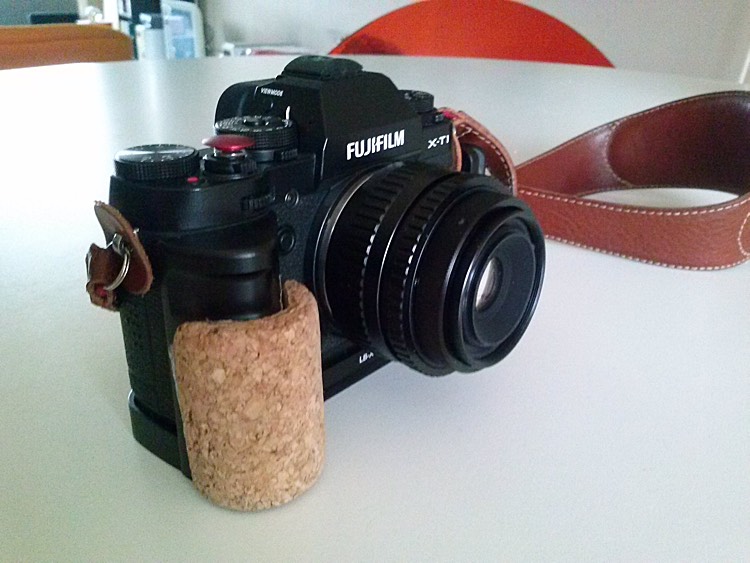
Well, for clarity, maybe better to reiterate that the last picture of the series is made with the added use of the miniature effect ( one of the advanced filters). The first picture is taken with the modified Elmaron lens, as is, no effects added, at f 2.8 ( and as far as sharpness in the middle and depth of field, I think that it is very good for being f2.8). Of course, to get a sharper rendition it would be very nice if I could ( and it is possible to do) mount an aperture ring in the construction but I am not sure that I want to go there. I wasn’t aiming at reaching an effect that I can reach with any other M42 lens that I can buy for little money. This is a slide projector lens after all. This construction serves the purpose to show that one can use these lenses, how to do that is a relatively simple way. The entire rig costed me les than €30 and the use of a few things that I had already. If you compare this to the result of a lens specifically made for portraits where the sharpness of the borders is not the result you need or want. I am very happy about it. As for the cork, that has been applied to a L plate with a front grip. The front grip didn’t offer much in a manner of grip because it is made of smooth aluminum witha ridge for one finger. I decided to buy a piece of high density cork and cut out a piece, then I drew the contour of the front grip inside and sanded it down then I took the front and gave it a rounded shape. Some double adhesive tape when inside and I glued the cork onto the grip. I am NOT naturally a very DIY inclined person but necessity ( or in the case just wanting to do something) is the mother of invention.
-
I have many adapters and manual lenses too. As much as I like adaptive photography it doesn’t work the same way as using lenses which are native to digital cameras. This is especially true of wideangles. There are constructional reasons for this : According to Mr. Takashi Ueno in his interview given to the Fujifilm Blog he says the following: http://fujifilm-blog...ull-frame-dslr/ “...Firstly, the angle of light that film and imaging sensors can receive differ from each other. Film can receive light at the slanted angle of up to 45 degrees without any problem, but in case of the digital camera, the light needs to be as perpendicular to the sensor as possible. Slanted angle light causes mixed colors and therefore the real colors sometimes cannot be reproduced. In order to receive the light perpendicular to the sensor, it is important to make the rear glass element on each lens as big as possible to put the light beams parallel from the outlet of the light to the sensor. Finally, the back-focus distance should be shortened as much as possible to eliminate the degradation in image quality..." And this made me think of why the resolution drops so badly on a digital sensor when using a “ legacy” lens and not as much when using a lens made for the purpose. The grid of pixels in the sensor acts , in fact, like a curtain with blades partially in front of a window. If you are standing right in front you can see the window behind the curtain but if you go all the way to the left, or to the right you can’t. Film was indeed more forgiving than sensors are. This is why It is better to limit the use of “ legacy” lenses mostly to normal and longer lenses rather than using adapted lenses across the board. However Samyang (for example but there are others) produces cheaper lenses than Fuji ( and some as good as Fuji) and has a range of wideangles. I own the 8mm fisheye and the 12mm two of the sharpest lenses ever.
-
there is a thread already about people missing screws, you can replace them yourself or order them, I they get unscrewed I don’t know. http://www.fuji-x-forum.com/topic/1927-tripod-screw-disappeared/
-
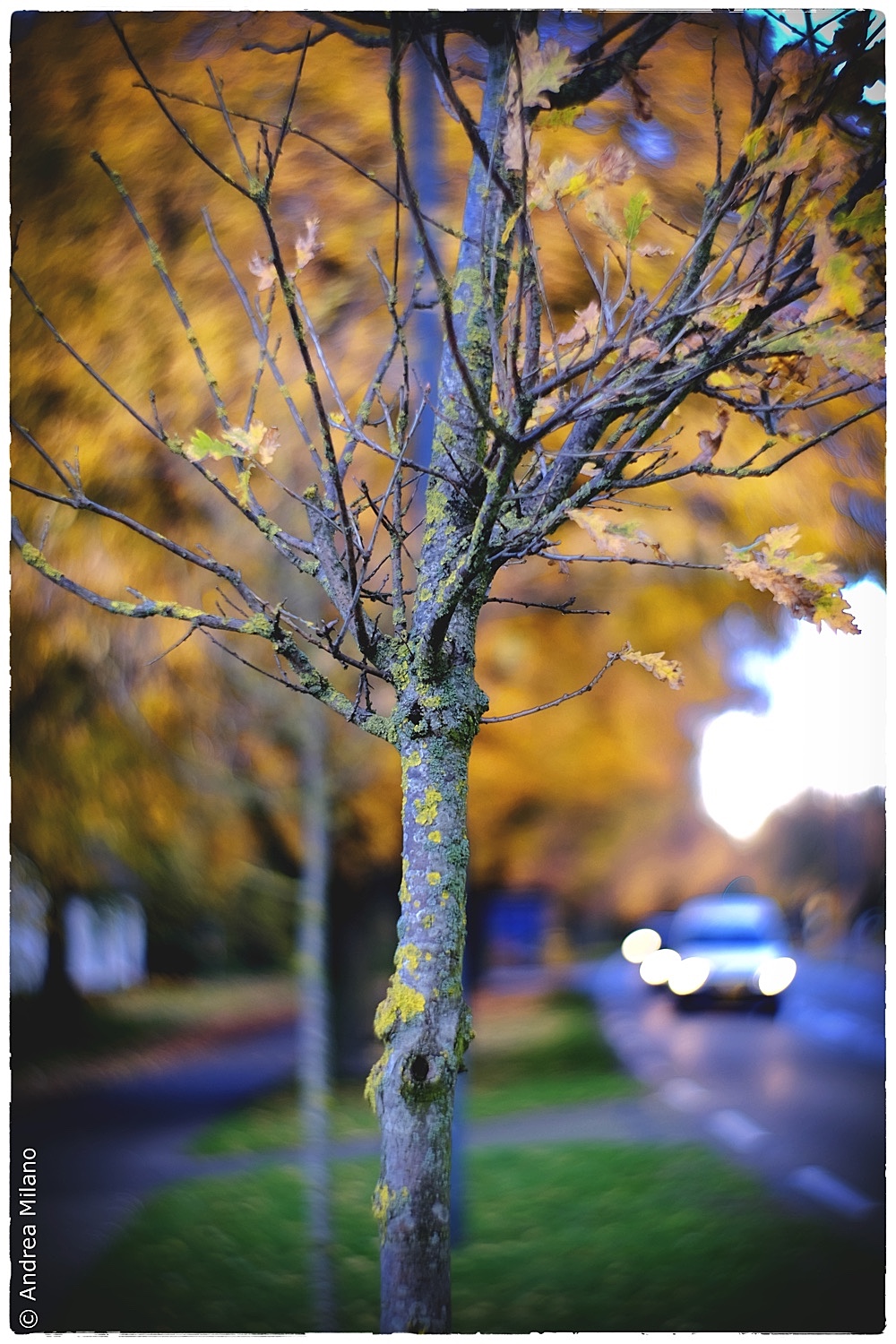
Well, I have done the adapting of the Elmaron 50mm f 2.8 ( which required a bit more ingenuity than the other adaptation. I used the helicoid but I also used a T2-M42 adapter where I took away the actual T2 ring and used the retainer screws to hold another ring which holds the lens mounted in the whole construction. These are the results. I like the portrait capabilities very much. The other pictures are just to show how the lens deals with unsharp bits ( I think it is fair to define this a soap bubble lens) and the third shows (sorry my phone is not a camera) what the whole thing looks like. The last shot is a simulated tilt effect adding the miniature advanced filter to this lens, pretty convincing ( butI find the tone of the miniature effect generally not so nice and you get no raw with any of those).

-
Can’t help your specific problem. I am vever ever used a cable to download pictures in all my years of use of a digital camera. Indeed, as Mirror Mirror says, why do you use a usb cable ( which could be broken by the way and a shortcut the reason of your problem), just take out the card and put it in the card reader it is also a lot quicker.
-
I thought that you might not have known that. Anyway, I advise you to be less eager to update software. Sierra has all sorts of programs which no longer work with the new OS. The way these days Apple (and everyone else, even Fuji) works is to put out the software, we test it ( for free) and slowly they release system or firmware update following the complaints albeit automatic ( your system sends feedback) or not. Good Luck.
-
the cause is sierra, there will be more software which is not working under sierra, always the same story, I am still running Yosemite because of this. Anyway, what is the data that you are missing? A lot , such as: focal length , shutter speed, type of film simulation date and many more things...., is simply contained in the other info, outline the file press command I (information works with any fil on a mac), if you load pics in Flickr at the bottom of each file, unless you hide it, it will tell you and anyone else every possible data.
-
then you can’t go wrong with this lens Good Luck!
-
Well, I have used this lens many years ago, when it was actually on a 35mm film camera. I was using Pentax and other camera bodies with M42 lenses. A good lens by any standard. However, I don’t use adaptive photography for its image quality or sharpness but for all the other characteristics. In fact my favorite lens at the moment on my M42 adapters is a Oreston 50mm f1.8. Which is both soft and sharp depending on the aperture. I have great experience with the cheap K&F Concept and also with the Macro Helicoid Adapter by Pixco.
-
The way I’ve always read the original post (which I am re-quoting here) is that Op wants a smaller image than the one offered normally. I have a X-T1 the X-T1 enlarges the image (zooming in or out) but doesn’t make it smaller. We have a standard magnification and starting from that you can zoom in, but, at most, you can zoom back to the standard magnification but not less that , if you can make the image smaller than standard magnification on the X-T1 you either have another camera or I never found that function.
-
or if you hit, by chance, the advanced filter mode, you might have taken pictures in one of these Pop color, high key, low key, dynamic tone, and luckily hit one which wasn’t too shocking like toy or miniature or soft focus.
-
already posted in another thread but this is probably a better place.
-
Purple Image Error X-T2 (and X-pro 2) with backlight
milandro replied to a topic in Fuji X-T2 / Fuji X-T20
huge, spectacular, wow! Big words. I’ve yet to find a picture that could be made with the two new cameras and could NOT be made with the old one. The joystick is much criticized , the video functions don’t interest me. I can print 2 X 1 meter with the X-T1 and the difference with the X-T2 will still be almost invisible. Obviously we live in a different world. I am happy and you are too. -
Purple Image Error X-T2 (and X-pro 2) with backlight
milandro replied to a topic in Fuji X-T2 / Fuji X-T20
no, but after the honeymoon period ( de few months after the intoduction of the new cameras) now a lot of people start realizing that the “ improvements” are mostly negligible while the price they paid for those questionable “ improvements” is absolutely tangible. Again If I’d shot the picture above with the X-T2 I’d be now complaining. But I am not, because I didn’t use the X-T2 but my X-T1. -
Purple Image Error X-T2 (and X-pro 2) with backlight
milandro replied to a topic in Fuji X-T2 / Fuji X-T20
another reason not to desire upgrading my X-T1 then. -
Purple Image Error X-T2 (and X-pro 2) with backlight
milandro replied to a topic in Fuji X-T2 / Fuji X-T20
click on more reply options and then you have the menu for attachments , you have 1000Kb each post and can put as many images as you want within that 1000Kb. You have no limits of posting and each post can be as big as you possibly can fit. -
well Johan, the reason that many “ upgraded” was ... because “ New" and “ Improved" are the key words in advertising ever since this was invented. Whether “ new” and “ improved “ is also better, remains to be seen. Ive have seen mediocre photographers making mediocre work with their old camera and keep lingering in mediocrity even after “ upgrading”. The new box contained the same old chops but was way more expensive and for some brought the need about to buy new computer and new software ( because some old software doesn’t recognize the new camera, you can go around that but some simply bought new software to go with the new camera. Why not? it is all New & Improved after all!) This is the fool's merry-go-round of the fool’s mulberry bush, and of course, perfectly attuned with the idea that wealth is measured with how much you spend (gdp) not in how much you know or do with the things that you already have without the need to consume things that are above your needs or capabilities.
-
Cheers, Johan I am all for it too. I really haven’t found any reason to upgrade to the generation 2 and I am more than happy with my X-T1. I’ve sold the X-E2 and put the money towards a new fun lens, the Petzval 85mm and the focal reducer to go with it. I’d rather invest in glass that I might be using with a future generation camera ( I suppose that one day I will need to upgrade camera, computer and software). Many realize, but only after upgrading the camera, that many more things need upgrading too ( computer, software) for the time being I am happy with those things too. I am moderately thrifty and tend not to change things unless I need too.
-
officially the X-T1 was not yet declared “ discontinued” like many other cameras of the system which briefly were and now were brought back to “ in production”.