
milandro
-
Posts
3,943 -
Joined
-
Last visited
-
Days Won
107
Content Type
Forums
Gallery
Store
Everything posted by milandro
-

The Future of Fuji's APS-C Lenses - VOTE YOUR FAVORITE
milandro replied to Patrick FR's topic in Fuji X Lenses
put enough people in the same room and you will come up with any permutation possible of focal lengths, characteristics and price, possible or impossible. Oro, sed non cogito, ergo sum -
Petzval 85mm F2.2 in Fujifilm mount anyone?
milandro replied to milandro's topic in Adapting lenses to Fuji X
there are now 3 of these “ retro “ lenses to chose from, the 85mm, the 58mm, with variable swirl effect, and the 64 the Daguerre Achromat Art lens . All very nice but all of them an acquired taste of sort. -
no, but it would be better if it would 50mm : F.F= 35mm : Aps-c....
-
... double post
-
Equivalence values are a tradition in photography. They are at least ever since there were cameras around with a sensor smaller than 24 x 36mm, which was the size of the analog film, first invented for the moving pictures cameras and then used by Oskar Barnak when he invented the LEICA camera around the film format in order to use the widely available double perforated film. Conventionally the “ standard lens" value is give by calculating the diagonal, in millimeters, of the format. The les closest to this value is the so called “ standard lens”. Of course once you change the format this values also change but traditions are hard to kill. So people still refer to the values relative to 24 x 36mm (or full format) simply as a mannar to communicate. So the 35mm ( which on a FF would be a medium wideangle) is the “ standard” lens on the APS-C used by Fuji. Really there are some consequences also concerning the relative aperture and sone like to point this out, but frankly this is a rather useless exercise. You are right, it would be better to use another way to talk about lenses like for example the field angular view ( how many degrees of an angle the lens shows) and refer to it alone. But traditions are hard wearing. Of course nowadays there is a generation ( and maybe OP is one) of photographers who were born when film cameras were already gone and don’t even know what a 24mm was on a 35mm film camera.
-
to me OP’s are very different form the ones above, either way, he cannot clean this himself
-
X30 Gridlines not showing
milandro replied to Yorkcov's topic in Fuji X10 / X20 / X30 / XF1 / XQ1 / XQ2
Yes, that and then you need to toggle between the 3 screen options http://fujifilm-dsc.com/en/manual/x30/menu_setup/screen_set-up/#framing_guidline -
Petzval 85mm F2.2 in Fujifilm mount anyone?
milandro replied to milandro's topic in Adapting lenses to Fuji X
I am not quite sure what you mean by: “ darkening making it difficult to focus”. If you mean loss of light in the EVF, depending from using a closer aperture (?), no, no issue whatsoever. No impairment of the vision though the EVF of my X-T1. This is an “ issue” that has bugged me about all sorts of people talking of using very light efficient lenses versus less light efficient ones. Unless we are talking of focussing in near darkness, where the EVF would show a certain amount of noise anyway, the image in the EVF gets enhanced in brightness terms ( if you are using for example, as I do, Automatic exposure with Aperture priority). So there is no difference in the level of luminosity whether you focus without any aperture ( which will be even less than 2.2 the smallest of the apertures or 5.6). Not only with this lens, but in general with any lens. Using a 56mm 1.2 and a 100mm 4 gives you pretty much the same picture under most light circumstances. I can’t believe that one would proceed to shoot a portrait with any lens in near darkness and using 3200 iso or above! However my advise, if at all possible when using this lens, and certainly with portraits is: 1) use a monopod or even better a tripod 2) Focus without any aperture slide and then insert the aperture slide when ready to shoot. If you find this a cumbersome process remember that this is NOT a quick lens for a quick shot. This lens requires a thinking photographer and, as a person whom was used to shooting portraits with 4 “ x 5” and larger formats, it is still way faster than focusing under a dark cloth with the aperture wide open, close the lens, close the aperture at the value you want, cock the lens shutter , lift the dark slide of the film holder, click, close the dark slide and turn to the other side of the film holder and repeat the process! However for shooting around in daylight, just pick the aperture that you want and chose the sensitivity that you need to achieve the shutter speed that allows you to not get motion blurred pics (I have to say that this is the most complex thing with this lens). Focus with the aperture in place and shoot away. Other than that more cumbersome than most processes, I am really happy with the lens. It does exactly what I expected it to do and look forward to more pictorial still-life photography, which I intend to do with it. For those looking for this lens. I anticipate that many people whom bought this lens will sell it because the lens drive the photographer to make his taking pictures experience an exercise of thinking ahead and forces one to reducing speed. Slow Photography! Great! If one is such a person, who thinks before shooting and one who likes to take the time to shoot, it will reward you, if not it will frustrate you. -
somewhere in Russia or Central or Eastern Europe since there are only Russian cameras ( aside Polaroids) a Samovar and tea glasses
-
there are different sets of menus. The playback menu ONLY shows if you push the playback triangle first , then you push “ menu” and so you get into that menu.
-
Petzval 85mm F2.2 in Fujifilm mount anyone?
milandro replied to milandro's topic in Adapting lenses to Fuji X
and this
-
Petzval 85mm F2.2 in Fujifilm mount anyone?
milandro replied to milandro's topic in Adapting lenses to Fuji X
anyway I took the lens out for a spin and shot some still life at the harbor close o where I live. I wanted to see how the new apertures slides perform with different than portrait range subject. Diffraction makes this aperture very tricky to use in portraits, maybe it will be best used in still life, tabletop and such.
-
Ask Mrs. Fuji to give you a cuddle a cup of cocoa , tuck you in and kiss you good night? There!
-
still, since the whole of the camera is not airtight ( and the seal of the filter isn’t either) it could have come from that, I think this aren’t specs of dust but, given the pattern, this is in all probability the product of condensation leaving droplet on the last element of the lenses, inside, and would have occurred anyway, filter or no filter. The use of UV filters is greatly pushed by shops because they make a ton of money on those no need to increase the paranoia about their use, most of the time they only mess with your picture by adding a surface way less pure than your lens adding only a false sense of security that if you smash the filter no harm would come to your lens!
-
Petzval 85mm F2.2 in Fujifilm mount anyone?
milandro replied to milandro's topic in Adapting lenses to Fuji X
I have finally received the set or “ Lumiere” whaterhouse apertures. Preliminary tests show that there is little difference before the 3 of them but that the blurred swirly part of the image has a definite different pattern given by the multi perforated aperture. Of the 3 the more closed one is probably the least useful since it produces a lot of diffraction that makes the lens even softer than what it already is. Yet, this is not a lens that you buy or use for its precision or sharpness! -
Prestige production without an economic return is a very luxurious undertaking for a brand which makes most of its money in sectors that are not digital photography. IF your pension fund has invested in Fuji stock I am sure that they will demand the company to make money and not losing any, prestige or no prestige.
-
what good whould it have been using a UV in this case? Obviously the specs are not at the front?
-
Fuji has repeatedly said that it is not going to happen because it would require a complete new camera. You can ask for the moon, but you are not going to get it. Industrial production is not a democracy. You can’t vote new products in. Right or wrong the way this cameras were designed cannot accommodate everyone wishes. Some will like it, some won’t. Vive la difference! But ask if you so please. Andy Warhol had predicted that we will all have 15 minutes of fame. This is the thing with internet and the modern sense of entitlement to being listened to, which is the base of “ Oh! So popular” the neo-populism: “ I exist ergo I demand that my opinion, no matter how inconvenient for anyone else, to matter for all and everything" Pointless though it is, yes, it is your “ right” to demand what you want. In the end they will do what they want with their company and that’s also their right to do so too. Only they get to decide.
-
Commiserations! Must be really horrible. My first encounter with persistent specs or oil spots happened with my first Fuji X-E1 and it turned into a chain of events which lead me to buy the X-t1. Sending the camera to Fuji from the NL turned into an very tiresome experience when it came back with even more problems that it had when the camera left my possession. Unless you are absolutely positive that this specs are not on the front lens they can only be at the back or inside the lens or even on the sensor and become visible only at apertures past 5.6. In any other case than being on the front lens, they wouldn’t be accessible to you to service , therefore you need to send it to Fuji. In general terms this is the reason why some folks prefer buying a camera with a fixed lens, because the camera will be protected by dust or other such things. The problem is, once spots are there, that it is way more difficult to deal with them. If this had been a X-A camera you could have had a go at cleaning the lens and sensor yourself and you will be good to go. As this stand you can’t do this. There is no reason to extend your suspicion to other cameras this might be an isolated incident relative only to your copy. There are no diffused reports of this happening to others. Good luck!
-
Apples and oranges. The GFX covers a completely different market where Fuji has little competition and high possible revenues because of the fact that most buyers will be professionals or amateurs with deep pockets. AS for the 100-400, Fuji has never had a credible long lens for those whom intend to use this camera for wildlife photography, sports or plane spotting. The 100-400 is such a lens. The number of photographers (especially amateurs) who use a camera for wildlife photography is certainly way higher than those in the “ need” of a 33mm f 1. Fuji, who is no stranger to providing people with cameras and lenses, knows that. But of course, people at home wish, beg and pray for Fuji to make any focal lengths with increments of 1mm, between 1 and 1000 and all with f 0,01, lightweight, ultrasonic, lenses. Naturally IBIS in a much smaller camera that at present and with FF 48Mp ( 6K of course!). Of course at no more than the price that they are buying their camera currently! As one does... with other people’s companies and money.
-
What is your X-E3 wish list?
milandro replied to bhu's topic in Fuji X-E4 / Fuji X-E3 / Fuji X-E1 / Fuji X-E2 / Fuji X-E2s
Praise Mount Fuji! You are beginning to see the light! -
What is your X-E3 wish list?
milandro replied to bhu's topic in Fuji X-E4 / Fuji X-E3 / Fuji X-E1 / Fuji X-E2 / Fuji X-E2s
... chimera -
Firmware Support
milandro replied to dbr.ro's topic in Fuji X-E4 / Fuji X-E3 / Fuji X-E1 / Fuji X-E2 / Fuji X-E2s
well, seen that the X-T10 was all the X-E2 ever became (after) the X-T20 is all the X-E3 will probably be unless they will put the joystick on it. So, to me, short of waiting, the X-T20 is probably what you need. Of course that is if you really believe that you need 24Mp, otherwise the market is all yours with any secondhand camera available and discarded by all those who can’t resist the lure of a bit more of MP, whatever they think that that will do for their pictures. -
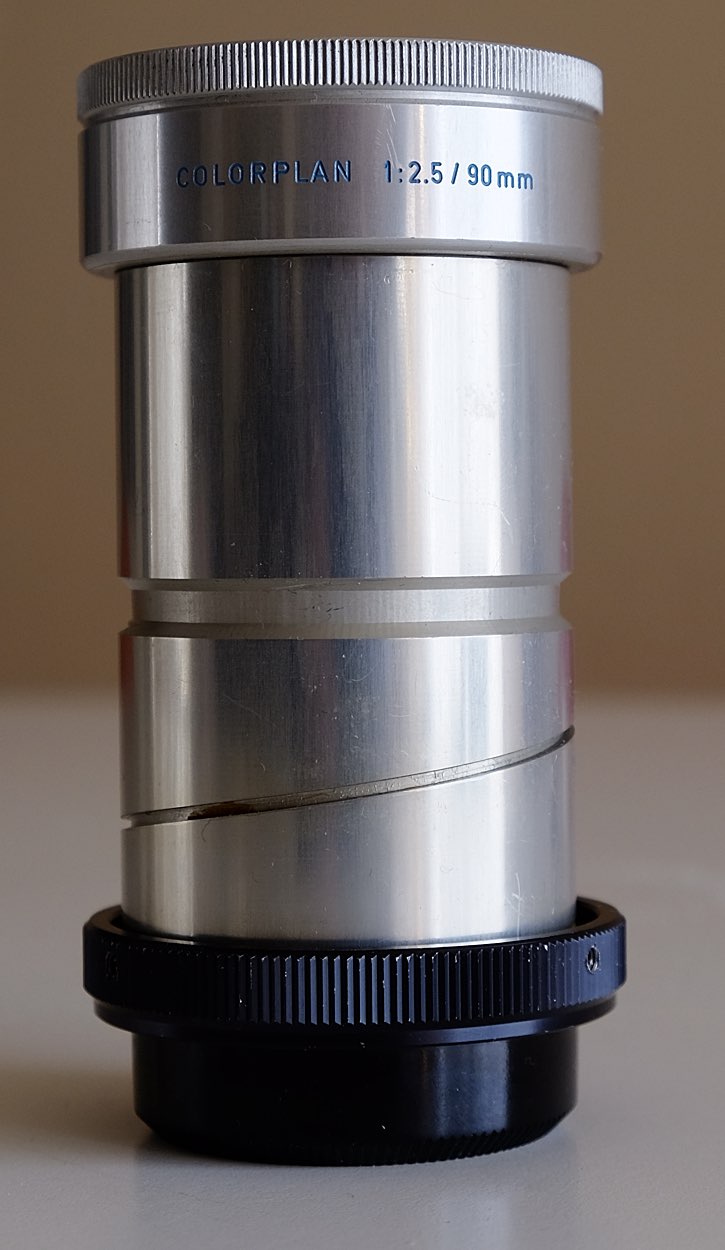
Leitz colorplan f2.5