

MSW
-
Posts
101 -
Joined
-
Last visited
Content Type
Forums
Gallery
Store
Everything posted by MSW
-
I have gone grey market a couple of times. No problems. I have never (over 40 years) needed a repair on a lense from a camera body manufacturer, only on third party lenses. To encourage no problems I suggest: Only high volume sellers with a 99% rating. If it's coming from China, stick to Hong Kong. Gray market from Japan seems to be totally reliable as well. Reference to "white box" is good it means a retailer has a stock of camera plus body kits and has broken them up to sell seperately. These are new and untouched. At least that's the way it is supossed to be. You only get hurt if you need warranty service during the standard warranty period. You could still get warranty service if you want to ship the item back to HK or where ever. If you need a repair in the US you are in the same boat as someone with an expired warranty. (I have read that Canon and/or Nikon may refuse to do anything -even for $$$ -- in this situation, but I've also read Fuji is friendlier)
-
Except for the X100T reference this is not a "Fuji Question". One sees the same question on UglyHedgehog almost daily except pertaining to Nikon or Canon. Here is my suggestion: If you use Lightroom or some other image file management software that let's you view and maybe even sort by EXIF data take a look to see what local lengths predominate among the images you have made. If you are zooming all the way out to 55mm with the 18-55 (like 50%) chances are you want a longer focal length. If 50% of you5 images are between 30mm and 40mm well you NEED a 35mm prime. Tec, etc.
-
Anyone have any information on how much difference there is between the new "OIS II" versions of the XC 15-50mm and XC 50-230mm ? Just better/faster OIS or are there other improvements?
-
FUJIFILM will develop an XF 8-16mmF2.8 WR lens
MSW replied to Patrick FR's topic in Fuji X Rumors & News
They could sell all three as a special edition set with matching serial numbers. Pack them in a custom leather covered, silk lined Pelican case. Let's see Leica beat that! -
Ken Rockwell is unimpressed
MSW replied to Dis's topic in Fuji X-Pro 1 / Fuji X-Pro 2 / Fuji X-Pro 3
Rockwell sometimes has useful info but you should filter it through your personal common sense module. First time I read his column he was praising all thing Canon and bad mouthing Nikon like crazy. A year later it was the opposite. Speaking as a dad he reminds me sometimes of a teenage girl - when there is some undefined annoyance with life the symptom is expressed by a stream bitching about everything in site that lasts from minutes to days. Just as you get used to this it all flips the other way and the world is suddenly filled with fabulous , joyous wonders. A long as I'm being catty let me note that I've looked at his gallery and while he may exceed my technical abilities I definitely do not share his aesthetic sensibilities. -
It's cool. I like it. It's a commentary (conscious ??) on equipment as objects of ownership vs.tools for a purpose. A couple of months ago I sat down on a stone bench to change lenses. The X-M1 was placed carefully on the bench beside me. Some guy came along, asked if it was a Fuji and said he was shocked I would treat a Fuji that way (setting on a stone bench). I was a little confused until I figured out he was serious. I explained I was more interested in what the camera could for me than to treat it like jewelry. Nice guy but all he wanted to talk about was cameras -- not one word about what I was doing with it, (which might have been interesting since I had had it IR converted.. I know someone here who takes his Toyota 4x4 out to remote ares of the southwest where roads are primitive to say the least. He tells me that when he bought it one of his first acts was to bash a large dent in the body work so he could past that stage of new vehicle obsession and get on with just using it as intended.
-
Is there an insurmountable reason why Fuji X's lowest ISO is 200? ISO 50 would much appreciated on certain occasions: moving clouds, flowing water, etc. Yes, I can (and do) use ND filters (note the plural) but needed two full stops of ND filtration just to slow the shutter down to what I used to start with Koda/Ekta-Chrome is annoying at times. (PS- if this topic was covered else where I appologize -- please advise -- I looked unsuccessfully)
-
Yes. A general purpose f/2 50-60mm would make sense. Both the current 56mm and 60mm are very good but their specialized nature make them either rather large and bulky or slow focusing or both.
-
Sadly, all sources I can find on-line read very explicitly "Cannot ship to United States". Presumably some sort of US vs EU thing.
-
Can't say I'm too upset the X10/20/30 series was just a little too bulky for me. My ideal for is Canon's S100/110/120 series. The fit in my button flap shirt pocket and are not too heavy. Canon's new G9X just fits into this niche but has a 1" sensor. That said if Fuji wants to attach this market segment ("fits in my pocket but unlike my iPhone is a real camera") they could try something does not exceed the vweight or dimensions of the G9X but X-Tran-ize the 1" sensor. And Fuji-ize the controls. That would be something that I would make it practical to have a camera every time I step out the door.
-
X-E3 Concept
MSW replied to Jano's topic in Fuji X-E4 / Fuji X-E3 / Fuji X-E1 / Fuji X-E2 / Fuji X-E2s
Actually, I like the location of the AF-L button. I usually set the camera to manual focus and in that mode pushing the AF-L is "back button focus". -
I have seen MTF graphs comparing both. Yes, the XF is sharper but if you look at the vertical scale, you may see that the difference is not really as great as it looks - it depends on thpow the graph is presented. Sharpness often depends more on technique than on the difference between lenses. What I can tell you is that subjectively the photos made with my X-E2 + 50-230 are in the same league as some I have taken in the past with a Nikon D7100 + 55-200. I suggest lower weight and lower price are the pluses for the XC while lack of aperture ring is the biggest minus. The XF is most likely more durable which could be an issue if you tend to bang up equipment. On the other hand if you by a used XC, it costs so little that damaging it wont be the end of your financial world. The aperture ring could be an issue if you have other Fuji lenses that also have one - I find that switching between aperture ring and no-aperture ring an annoyance. If you are transitioning from Nikon or Canon, setting aperture with a wheel on the body will feel normal.
-
I stick with official Fuji batteries (despite the impressive high price) for my X-E2. I tried a couple of other brands available in the US and the best ones disappointed while the worst totally suck. I've read that Pantona batteries are very good but they are not available in the US.
-
Google Nik Collection has helped with sharpening my Fuji files in Lightroom.
MSW replied to val's topic in General Discussion
With one exception, I have found that for me doing anything sharpening other than default LR has a significant probability of doing more harm than good. Keep in mind that I'm judging this based on 12'x18" prints which are start out much sharper and detailed than what appears on a monitor. My main objection is visible artifacts from unsharp mask and similar processes. The one exception is the Topaz Labs "Detail" plug-in. I have no technical explanation but "Detain" when used cautiously can do as much sharpening as I require with no sign of artifacts. (Note the word "cautiously" -- get heavy handed with the sliders and it can make a spectacular mess. -
"Will Fujifilm Make The Same Mistake?" Probably not since one of their representative has said publicly they have no interest in FF. There are recent hints that that's not the case regarding MF. If the MF is tru I hope they are aiming at Pentax prices rather than Leaf or Hasselblad prices.
-
I do not use UV filters. But I DO use high quality clear filters usually B+W or Hoya HD2. The HD (and HD3 presumably) are kind of weird that is dust literally falls off them and unless you have marmelade on your hands they are difficult to smudge. I have no faith they will protect my lens from a significant impact -- rather what Use them for is to keep of dust and dirt and crud. They are much easier to clean (unscented detergent and warm water) than the front element of a lens. They are expensive so you have to weigh their value against the replacement cost of the lens being protected.
-
I have a hard time buying into Khong's premise. Using a narrow depth of field as a compositional tool to isolate a subject has nothing to do with low light. If you want to see how this works watch some movies with the sound turned off and follow what is in focus and what isn't. Use of narrow/restricted DoF is not limited to portraiture; it can be used in nature subjects and even sometimes in landscapes. The emphasis on smooth bokeh is (i think) relatively recent and is secondary. But it has validity relative to my comments above. Smooth featureless bokeh improves the goal of separating subject from background. This is illustrated in reverse by some of the modern interest in older somewhat funky Soviet era lenses that sometimes have peculiar artifacts in the out of focus areas. (Example: look at the out of focus circles that are common in the season 1 of the series "Jessica Jones" -- the artifacts are sometimes so distinctive that I suspect a F/1.8 50mm Meyer-Optik-Goerlitz adapted to video. They look just like the artifacts mine produces on an X-E2. I find it annoying, but it has obviously become artsy and hip. Going back to low light - narrow DoF is sometimes just a trade off vs ISO-related noise. You cant have everything! Khong's concept of "The Line of Realism" is (in my opinion) a red herring, a strawman. "Realism" is very slippery notion. As I get older, I start to understand better A. Adams' comment that "what is before the lens is always the illusion of reality" (from Ansel Adams, An Autobiography).
-
What is your X-E3 wish list?
MSW replied to bhu's topic in Fuji X-E4 / Fuji X-E3 / Fuji X-E1 / Fuji X-E2 / Fuji X-E2s
I think I've mentioned this else where and I think this may apply to more than just the X-Ex series: Exposure bracketing allows you a maximum range of +1/0/-1 stops. I really want the option for +2/0/-2 stops. I some landscape handheld HDR is very, very useful. -/1 one stop is not enough, however. I'm not a big fan of the HDR "look" but it a useful capability in some situations when you just want/need more DR. I can do it now if I have a tripod but that is not always the case - plus lugging a tripod kind of goies against the whole X-E1/2/3 idea.. -
I have two X-E2's.. Both have FW 4.0. One does the crop "trick" and one doesn't. While I assume it must therefore be something in the menu settings both seem to have the same set up. I have not been able to spot the difference.
-
23mm is not a very common focal length and the XF23mm is probably the best performance vs price around. However, if you are think of a (D)SLR lens 24mm is fairly common both for full-frame digital and film era bodies. BIG HOWEVER, in F/1.4 it is likely to be very expensive.
-
X-E3 Concept
MSW replied to Jano's topic in Fuji X-E4 / Fuji X-E3 / Fuji X-E1 / Fuji X-E2 / Fuji X-E2s
I would prefer keeping the current layout of buttons. Also please move the tripod mount so the battery door can be opened when a mounting plate is attached. How about an optional eyecup for the EVF to make it work better in bright sunlight. These may apply to all models: --Wider auto exposure bracket (+/-2, +/-1, 0 ) not just limited to +/-1 Needed for HDR triples-- we haven't reached limitless sensor DR yet. --On X-E2 drive options, the two continuous frame rates seem either too fast or too slow to me. Can we get something in between? --UHS-II compatibility. Need to clear the buffer faster! -
Just my opinion but I think when comparing two modern cameras with fairly similar format and resolution actual image quality depends more on the photographer than the equipment. I also think the preceeding should be modified to consider that ease of use, ergonomics and such may have an impact on the on how well the photographer does his/her photography thing..The most obvious difference between the two cameras is the controls. Much of what you do on the Nikon via the menu system is can be done on the Fuji with external controls. Some people are more comfortable with using the menu than with the external controls. Needless to say those who prefer Fuji are by contrast more comfortable with the external controls. Then there are unique features. I've owned a D5100 and for me the one thing I miss most is the articulated LCD screen. On the other hand on the Fuji you can display a histogram in the view finder before shooting - this gives me more useful information about the exposure I want. BTW, I passed on the X-T1 and use the X-E2. Its a little smaller and costs less. The areas where the T1 excels turn out to be less critical for the photos I make.
-
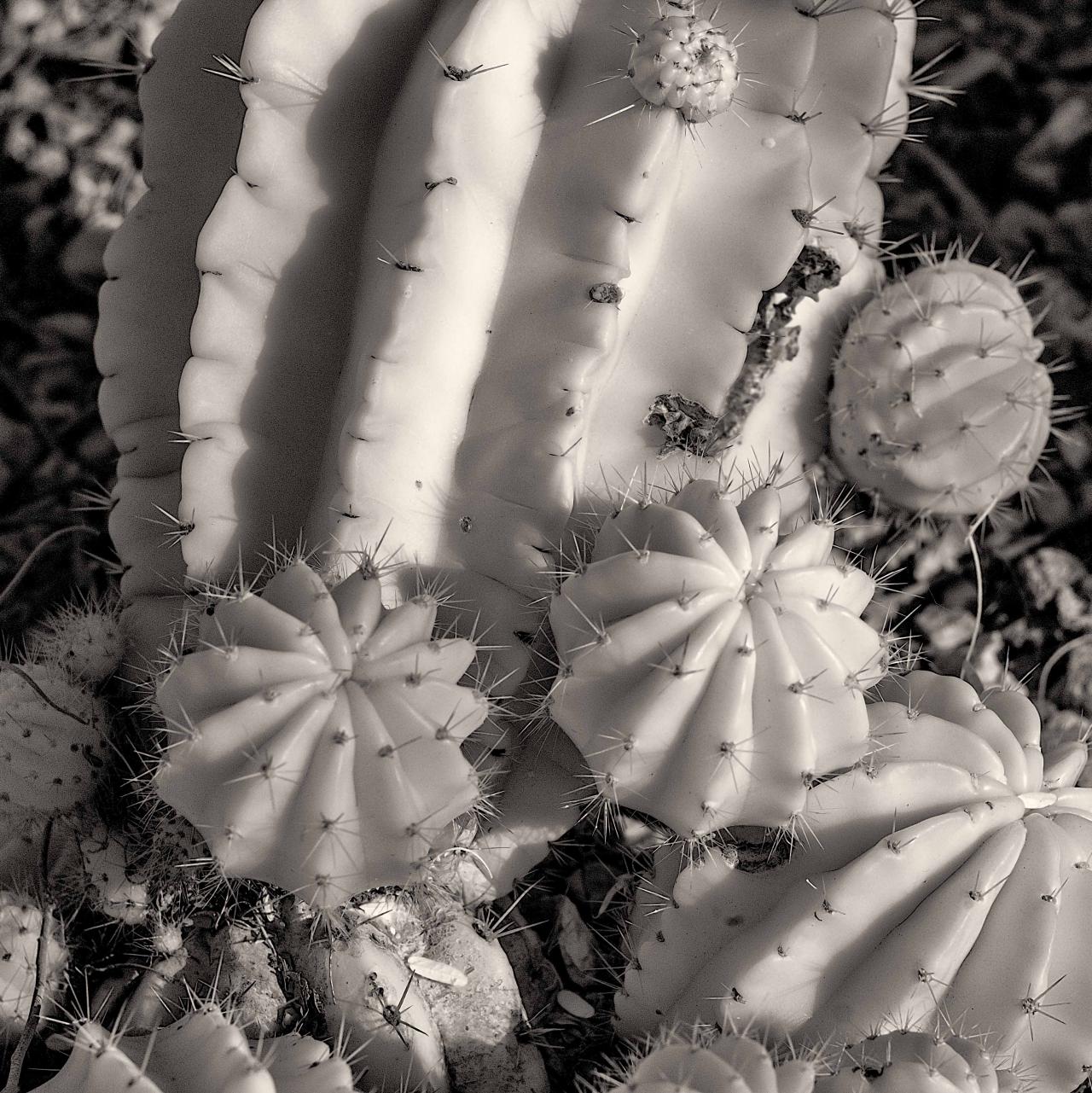
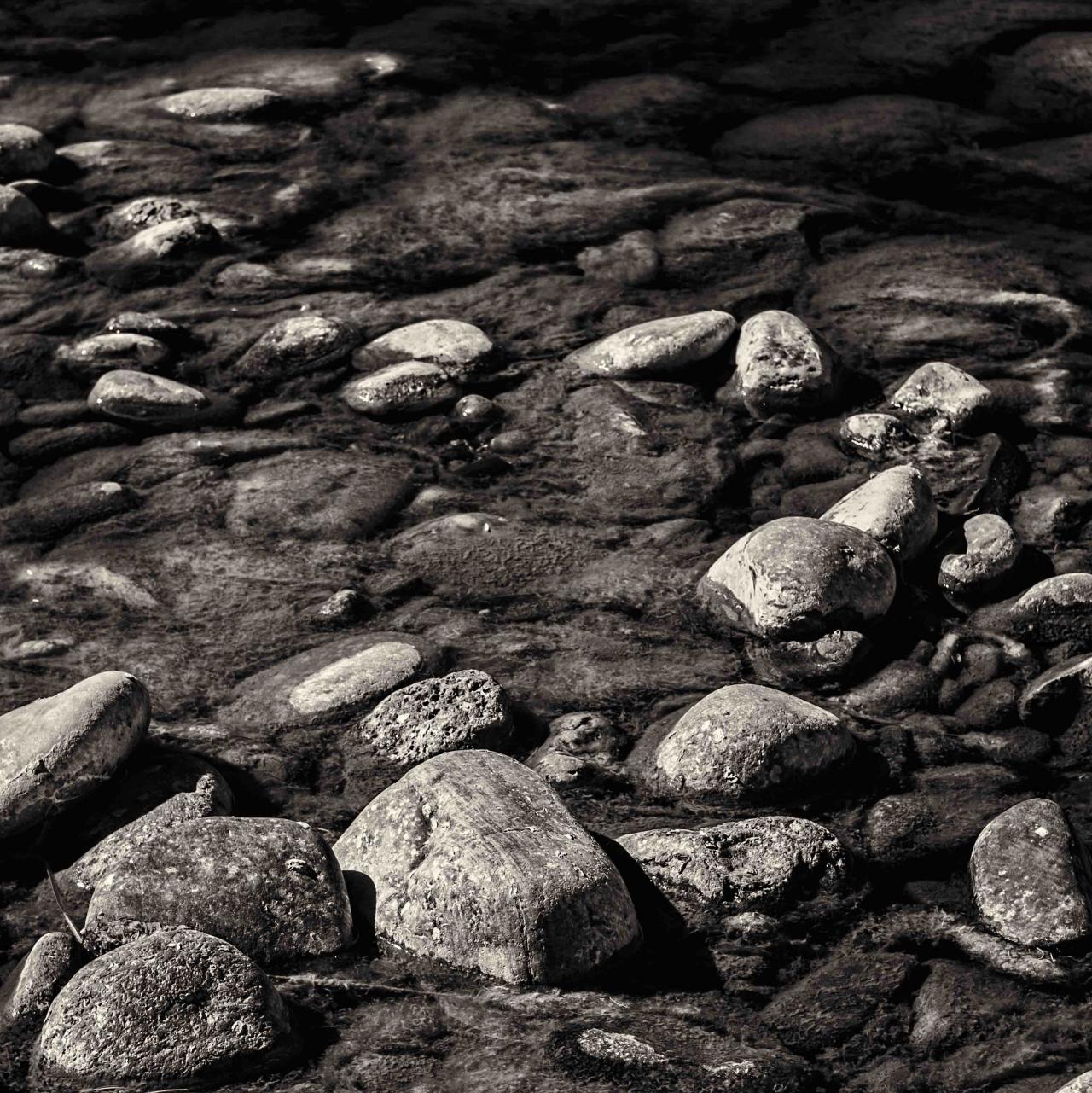
These were made with an IR converted x-E1

-
X-E1 converted to IR.
-
Here are my personal reasons for why one might want to use an older lens with an adapter: A- Cost. Say you can't afford Fuji's 56mm just now but still have your older Nikon equipment - Nikon's 50mm f/1.4 is a very, very good lens and if you can deal with manual focus can do nearly everything the XF56mm can and the price on eBay is very reasonable. I imagine the same situation applies with Canon. B- The older lens has a capability Fuji doesn't cover yet. Example: Nikon AF 105mm micro which has a 1:1 magnification ratio and maximum sharpness at f/11 to f/14 giving extra DOF. Also has a greater working distance than Fuji's 60mm. Longish manual focus throw helps for focus stacking. These factors may mean a lot to someone doing serious macro photography. This is quite a bit of weight and bulk so for most people the XF60mm makes more sense. Other specialty lenses might include swing-shift or Nikon "DC" lenses. C- Vintage look, i.e., softness and weird bokeh. Even bad flare that wouldn't be acceptable on a modern lens might be useful. I like the Russian made Helios for this. (Just my opinion - adapting older Zeiss or Leica lenses is a wast for this purpose because they are too good!) D- Its fun