
jerryy
-
Posts
1,926 -
Joined
-
Last visited
-
Days Won
304
Content Type
Forums
Gallery
Store
Everything posted by jerryy
-
Why didn't my experiment let me see phase detection pixels?
jerryy replied to Astigmatism's topic in General Discussion
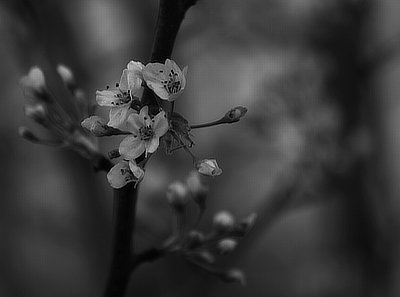
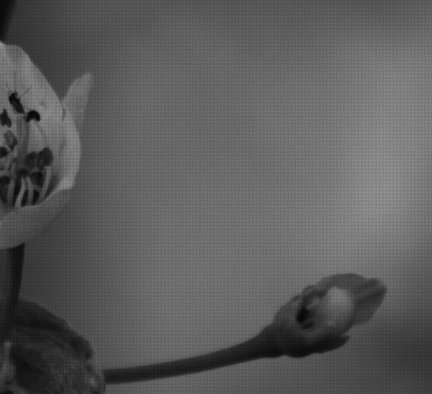
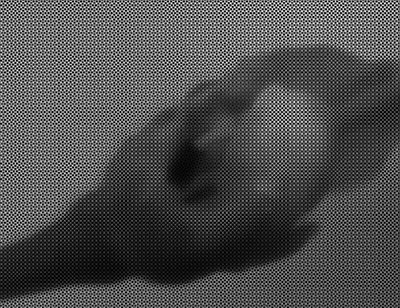
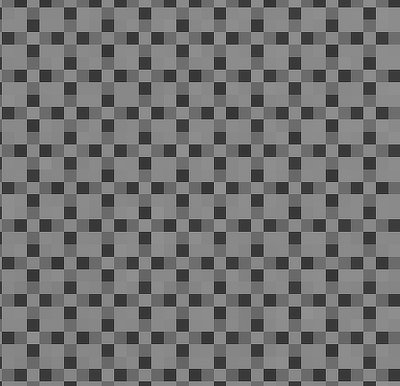
If you are able to split the image into separate RGB channels, your software was not really giving you a view into the actual raw data, but was giving you a view of its version of the secret sauce fueling the Fujifilm magic decoder ring used to give us the beautiful images we get, i.e. de-mosaiced data (de-mosaic is the name given to translating Fujifilm X-Trans sensor data intio RGB values, similar to de-Bayering for Bayer sensor data). That process most likely takes into account methods for dealing with the phase detect and contrast detect focus pixels. The actual raw data is linear, gamma = 1, 'grayscale <--> B&W'. The raw file image data contains the information raw convertors use to turn this into the color images we see. Here is a recent image I posted in the Flowers thread over in the Nature section, to illustrate zooming into a linear (raw) image file. Keep in mind these are cropped, quick screen captures, no in-depth analysis or anything like that. Processed jpeg file> Linear image> Zooming> Software like Raw Therapee may still give you the means to look at the linear data.
-
-
Fujifilm XT-3 photos noticeably more darker
jerryy replied to borlorjee's topic in Fuji X-T3 / Fuji X-T30
Well, it has its use, but if you want to get a closer match between the LCD's presentation and what you see when you view the image on your pc, try turning it off. -
Fujifilm XT-3 photos noticeably more darker
jerryy replied to borlorjee's topic in Fuji X-T3 / Fuji X-T30
Do you have Natural Live View turned on? It affects what you see on the lcd screen, usually brightening things from a little to a lot: https://fujiframe.com/articles/natural-live-view/ https://www.thewanderinglensman.com/2018/12/a-fujifilm-x-t3-feature-ive-come-to.html p.s. Welcome to the forum. -
Photo taken at night with black strips
jerryy replied to kentuckykai's topic in Fuji X-T3 / Fuji X-T30
Try using 1/30, 1/60, 1/125 shutter speeds (assuming this is in the U.S. — which uses the 60hz a.c. electrical frequency, other places in the world use 50hz a.c. frequency rate, so try 1/25, 1/50, 1/100 if this is there). But note, this is just something to try, the oscillator in the lighting controllers may not be keyed into the a.c. line frequency, and may just be low cost versions that run non-standard rates. If that is so, then you will need to experiment to find the timing rate and then use similar types of shutters speeds as I listed above. If that does not work, try shining a low powered flashlight on the scene, preferably one that has a not-led bulb. Or, pop the scene with a flash to over-power the lighting. Keep in mind these last two options can affect the white balance. -
Photo taken at night with black strips
jerryy replied to kentuckykai's topic in Fuji X-T3 / Fuji X-T30
This is a guess based on your image, but from the light color and type of lights, it looks like those are LED / CFL lights, which are not constantly on but actually flicker rather rapidly, The LED lights can use a controller to change the brightness that changes how long the bulb is turned on and off. The flashes from these kinds of lifhts happens too fast for our eyes to detect and we see them as being on all the time. Many digital cameras use what is called a rolling shutter rather than a global or leaf shutter which means the pixels are not read all at once but are read a line at a time or a pixel at a time into the buffer that “makes” the image — this is very similar to the way old crt televisions work. Combine the light cycle time with the camera read cycle time and some lighted scenes give you sweeping dark strips in your images. Some folks get around this by changing the aperture, others by lowering the shutter speed — may need to use a tripod with these two approaches, some by only using the mechanical shutter (mechanical shutter is said to be less affected than electronic shutter). YMMV. p.s. Welcome to the forum. -
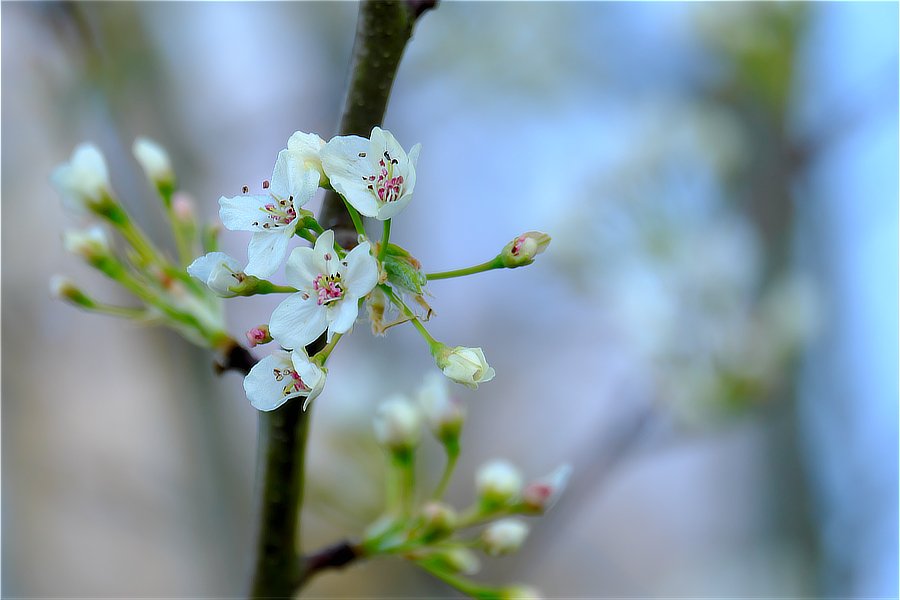
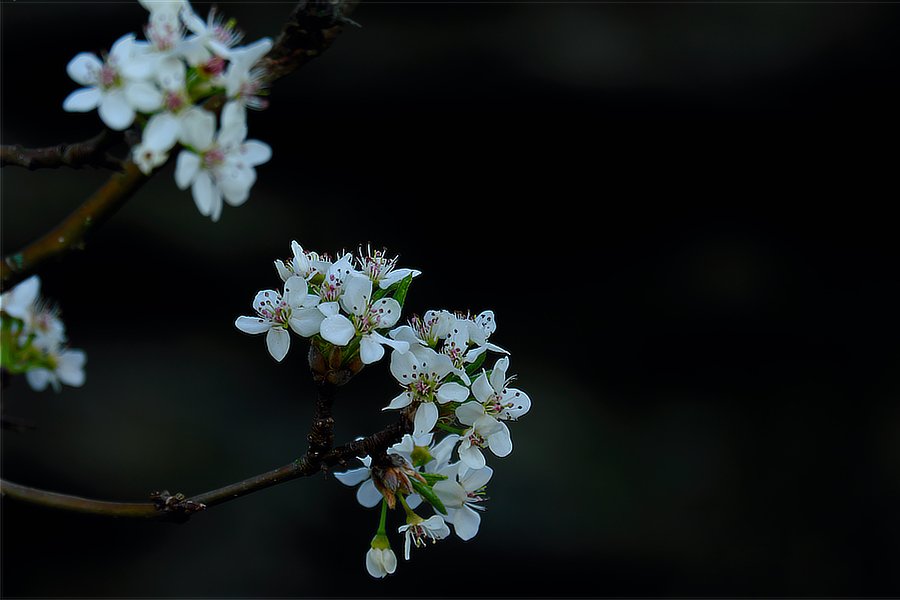
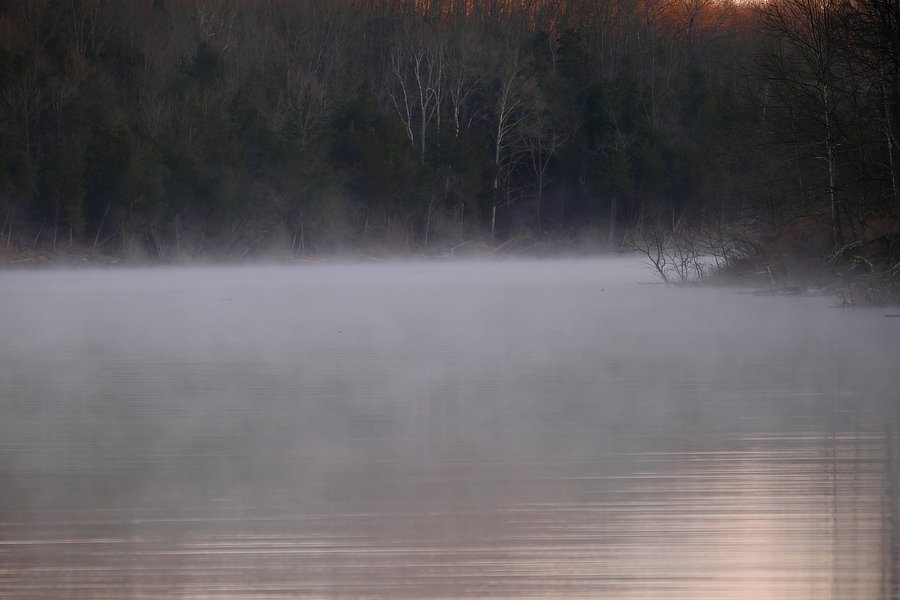
The calendar says the northern hemisphere's winter is finished for this year, so technically this is earliest, most early spring. It is still cold though.
-
That usually seems like it is the card tested by the person submitting the report. You can, in many cases, use the smaller sizes. There are some manufacturer’s cards that do not work well, usually that information gets discussed from time to time. Of course, some cards have not yet been tested with the results posted for consideration. https://fujifilm-x.com/en-us/support/compatibility/cameras/ Click on a camera and you will get a list of supported card sizes and for some cameras, a list of which manufacturer’s cards passed their testing.
-
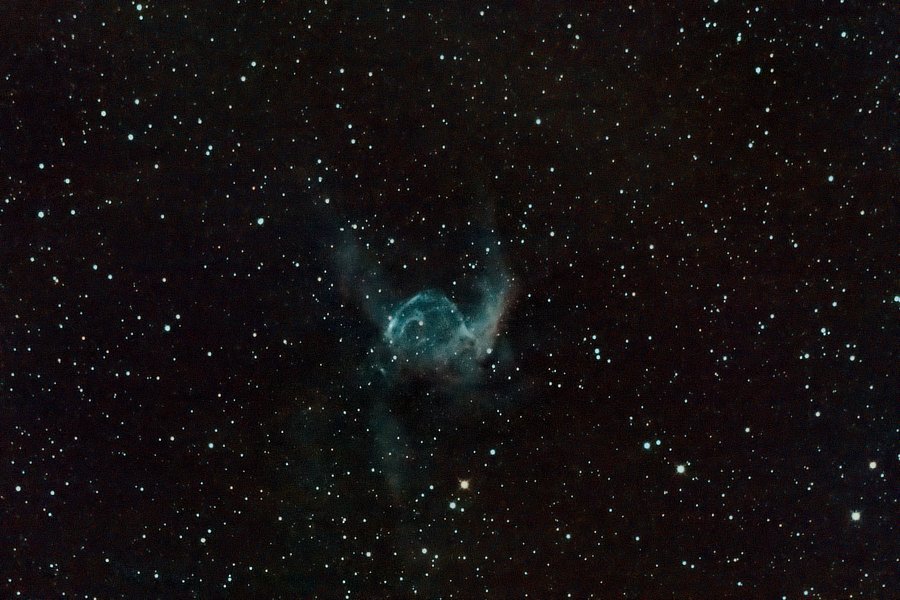
Another fine chapeau ... Thor's Helmet (NGC 2359). This is the equivalent of a 52 minutes, 30 seconds exposure. Other known aliases include the Duck Head Nebula, the Flying Eye Nebula, the Duck Nebula and the Whistle Nebula. Like M104, the Sombrero Galaxy, Thor's Helmet is certainly large enough to keep the hot sun off of your head. The nebula is actually a big 'ol bubble formed by a solar wind blowing from a star through a gas cloud. https://lowell.edu/2020/11/03/outer-space-spotlight-thors-helmet-nebula-ngc-2359/ https://www.constellation-guide.com/thors-helmet-ngc-2359/ https://apod.nasa.gov/apod/ap200612.html
-
 Do you have a version taken with a Fujifilm camera?
 -
Woodford County, Kentucky, USA
-
Incredible! I am glad to read that things are working well for you. More please.
-
Fujifilm does offer some support in South Africa, https://www.fujifilm.com/za/en/consumer/support#digitalcameras maybe they will be able to help you.
-
Woodford County, Kentucky, USA
-
As Olaf said, welcome! As far as the lenses go, it will be tricky to do well in all of those areas without some kind of compromise somewhere, for example, a long lens that gets you great wildlife photos most likely will not do so well in a street setting because it can upset the folks whose photos you are trying to get. Using a smaller, wider lens in that setting will not normally pose a problem. Wider lenses that are fine for landscape or astrophotography may not be what you want for outdoor wildlife, but are okay for zoos and nature exhibits. It is tough to get a single lens to work well in every setting. You might try a zoom lens such as Fujifilm’s 18-135mm as a very good starter lens and then, as you get used to what the focal lengths give you, add to your tools (lenses) when you can afford them. A lot of folks post the lens used information with the photos or it can be embedded in the EXIF information (this requires a separate software app that lets you read that information) that can give you an idea of what to try.
-
I believe the person posting the comment is asking if anyone has taken any shots of baby’s breath flowers, a small white flower very often used in bridal flower arrangements.
-
The Rosette Nebula has a lot of moving parts. Tucked away inside is a small cluster, NGC 2244. This is the exposure equivalent of just under 66 minutes. The cluster is surrounded by dust lanes, other nebulas and nebula stuff. Here is a slightly more brightened version: https://science.nasa.gov/ngc-2244-star-cluster-rosette-nebula https://science.nasa.gov/rosette-nebula https://www.galactic-hunter.com/post/ngc-2244 edit: This is a bit more distant view for the Rosette Nebula (using the feet to zoom does work 😀). This is the equivalent of a 19 minutes, 35 seconds exposure.
-
Copying images from camera/ Windows 11, no more MyFinePix
jerryy replied to jw432's topic in General Discussion
Do any of the methods outlined in this article work for you? https://pureinfotech.com/import-photos-phone-camera-sd-card-windows-11/ -
Below the menu setting you chose, the “SELECT PAIRING DESTINATION” setting, there should be one called “DELETE PAIRING REG.”, choose that one instead and then you should be able to delete the unwanted five phones.
-
The author’s / copyright holder’s name is found in the set-up menu: https://fujifilm-dsc.com/en/manual/x-pro3/menu_setup/save_data_set-up/index.html Change these entries to your name, save things and exit. https://fujifilm-dsc.com/en/manual/x-pro3/menu_setup/connection_setting/index.html It is probably easier to just delete the camera’s bluetooth pairing, remove the camera from the remote camera app’s camera list (click on the camera name in the top left and you get a new menu with choices to add new cameras or remove current ones) and re-pair it with your phone/tablet.
-
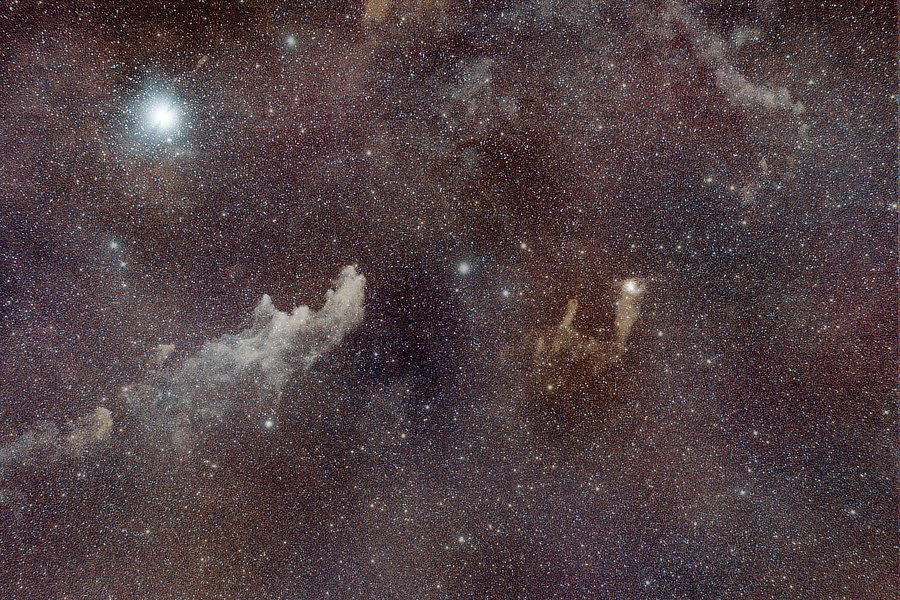
Rigel and the Witch Head Nebula: This is typically how IC 2118 (usually called the Witch Head Nebula) is presented, upside down. In space though, there really is no such place as "up". The nebula is a reflection nebula; which means it does not give off any light on its own, but instead reflects the light from stars, nearby street-lamps, errant flashlights, etc. 😀. https://www.planetguide.net/orion-constellation/ https://www.space.com/22872-rigel.html https://www.nasa.gov/multimedia/imagegallery/image_feature_1209.html https://www.nasa.gov/multimedia/imagegallery/image_feature_701.html (Part Two of Two)
-
Rigel Jams! (Early for Halloween) This is the exposure equivalent of not-quite-but-almost 61 minutes. (Part One of Two)
-
George!!!!!! Welcome back.