
Aswald
-
Posts
1,042 -
Joined
-
Last visited
-
Days Won
5
Content Type
Forums
Gallery
Store
Everything posted by Aswald
-
Interesting Interview..... http://www.dpreview.com/interviews/4663212665/interview-with-three-time-oscar-winning-cinematographer-emmanuel-lubezki?utm_source=newsletter&utm_medium=email&utm_campaign=generic&ref_=pe_1822230_187673810_dpr_nl_195_8 Sorry, typo in the title. "You Have To Underexpose"
-
So much presumptions. I did not make any assumptions on whether fellow photographers here truly understand the "basics" of lighting and neither did I urge anyone in any particular direction on how to spend their monies. I'm in the illumination consultancy business. "Soft" is a layman term for diffused lighting and yes, that is what they taught us in school. When was it....elementary? Every object is lit by three types of lighting. Specular, diffused and ambient lighting. These are what our camera sensor see and detect. Depending on the proportion of each, it will dictate the outcome of the picture, "hard" or "soft". "Expensive" legacy lenses is not an adjunct to good photography but neither do I abhor the idea. The article was posted for general reading in the general discussion section. Everyone is free to form their own opinion and voice them out perhaps even share their points of view or experiences. Together, we may come to a collective conclusion on whether the article holds any basis. It is an interesting read. I maintain that my original suspicion that it may be more an issue of DOF rather than optic design. Unfortunately, inconsistent test scenarios negates any plausible conclusion.
-
Pretty strong language.... I'm not going into what I know or you think I know coz we don't know each other. While I know exactly what you are saying, I will assert that a more correct term to use is diffused lighting rather than "soft" lighting as how you've described. I. e. Would you say that these two examples were hard lighting? I certainly don't think so. Your argument still does not waive the notion that legacy lenses has best optics for central render while modern optics are getting better edge to edge sharpness. This article considers the possibility that perhaps, something is giving way to achieve that. Do I worry about that on any of my lenses? Probably not.

-
A mk2 with better magnification and AF speed would be a welcome. As it is, I love the lens. A new design may see better focusing algorithm when more powerful and efficient motor designs are employed. Normally, newer powerful designs doesn't necessarily mean higher power consumption. It's usually the other way around as we move towards a greener future.
-
Yes, I can see the 3D noses although with the flat nose pic, the subject was relatively close to the camera. DOF issue? What I take from this article is that central detail and characteristics may have made way for more contemporary need for the edge to edge sharpness in modern optics. I don't think there is a right or wrong but more of what you shoot and prefer. What's good to note is that with these knowledge in mind, we may be able to shoot accordingly with whichever lenses we have. I'm beginning to notice similar characteristics in some of my legacy lenses.
-
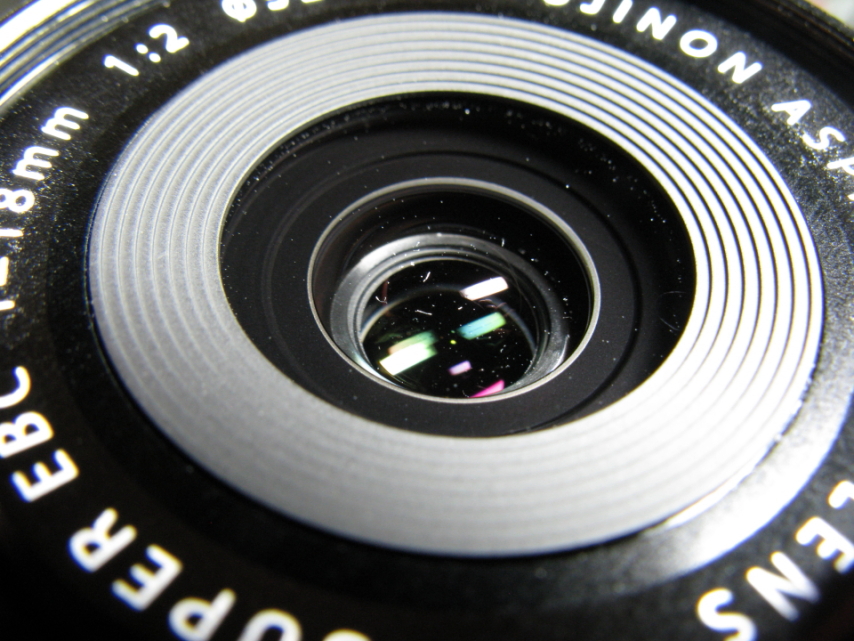
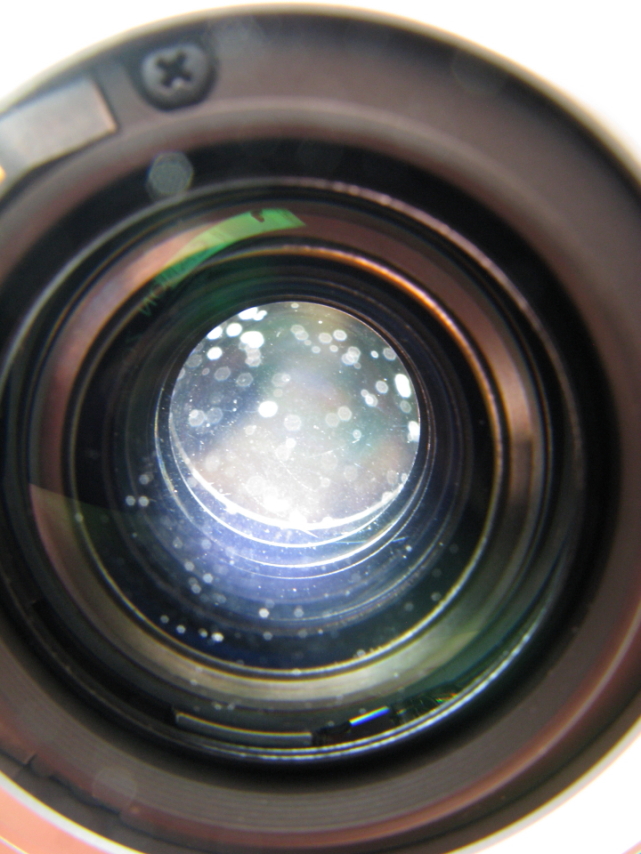
Don't forget the 18mm F2 which I consider to be the worse of the Fuji "dust magnet" lenses. Good news is that Fujifilm says it can be cleaned/serviced and that it doesn't really affect the lenses.....well, sort of....
-
Interesting read about the bsi technology.......
-
Mark II - Zhongyi 35mm 0.95 , smaller and better
Aswald replied to yukosteel's topic in Fuji X Lenses
I think that an imperfect lens with great character is better than a "perfect" lens without. -
What's that? I don't use one but the only one I've seen make very distinct difference are rodenstock uv filters. A layer of haze removed. If you really need one, I'd recommend that.
-
Mark II - Zhongyi 35mm 0.95 , smaller and better
Aswald replied to yukosteel's topic in Fuji X Lenses
Thanks for your feedback. Really nice rendering. -
I agree with JaapD. I first noticed this with older Canon FD manual focus lenses years back. Canon told me then that extreme temperatures affect lenses especially focus. Different at different focal lengths especially on a zoom.
-
Well, in some countries that is..... http://www.bbc.com/news/world-asia-india-35818831?OCID=fbasia
-
I found this review useful and accurate. http://www.dpreview.com/reviews/fujifilm-x-pro2
-
X-Pro2 low light AF speed
Aswald replied to back2fuji's topic in Fuji X-Pro 1 / Fuji X-Pro 2 / Fuji X-Pro 3
Mine works well. No issues. -
Mark II - Zhongyi 35mm 0.95 , smaller and better
Aswald replied to yukosteel's topic in Fuji X Lenses
Colors looks good. CA doesn't look like it's a problem when it's F0.95. Overall, I like the way the picture turns out. What would be the main reason/advantage to acquire this lens when say, someone already have the 35 F1.4? Thanks. -
Interesting read...... http://www.thephoblographer.com/2016/03/12/the-problem-with-modern-optics/#.VuOkc29f3AQ
-
My first impression is that the pictures from the X-Pro2 isn't as "soft" and "delicate" as the X--Pro1.....which I've come to love. It'll take some time to get to grips with the X-Pro2 and fully appreciate it's new character. Exciting times ahead...
-
Torn between 27mm f/2.8 and 35mm f/2.0 need your opinions please
Aswald replied to xtrans's topic in Fuji X Lenses
Excellent choice. The 35F2 is very sharp wide open. -
Nice. Is that natural vignette of the 23?
-
Fujifilm XF90mm - couple of sample portrait images
Aswald replied to PhotoMadd's topic in Fuji X Lenses
Wow...very sharp indeed. -
Torn between 27mm f/2.8 and 35mm f/2.0 need your opinions please
Aswald replied to xtrans's topic in Fuji X Lenses
I went for F1.4 version as the F2 version was not out yet. Lovely lens. Good color and great bokeh. Compact and fast. Sharp wide open. I can take almost any kind of photography with it. Would've been great if it focuses closer. It's a lens I'd recommend if you only want to buy one. -
Torn between 27mm f/2.8 and 35mm f/2.0 need your opinions please
Aswald replied to xtrans's topic in Fuji X Lenses
Both lenses are good with different strong points. XF27 - sharp lens, good for street and general photography. XF35 - Sharp lens. Better bokeh, good for portrait. Good one lens for all. Great balance between color IQ, sharpness, bokeh and size. I went for the 35 as I do lots of portrait. It's also my favourite x lens. -
Best SDXC UHS II Card for X-Pro 2
Aswald replied to RCL's topic in Fuji X-Pro 1 / Fuji X-Pro 2 / Fuji X-Pro 3
Nice! -
Best SDXC UHS II Card for X-Pro 2
Aswald replied to RCL's topic in Fuji X-Pro 1 / Fuji X-Pro 2 / Fuji X-Pro 3
True, I use both Lexar and Sandisk on my cameras with great results. -
To Leica's credit, it has given birth to a legacy of great shooters and directly influenced the design of cameras over the decades. It also brought us thousands of photographs from the field, especially pictures of war and other extreme circumstances. I'm not wrong to say that at some point in time, Leicas were all over the world used by a great many photographers. The fact that Fujifilm were dubbed the Japanese "Leicas" at one time, says a lot. Also, one can't really compare the photographic results of old film with newer digital Leicas. They're different medium altogether. One thing remains consistent and that is the built quality. Obviously, to keep up with the times, Leica needs to update itself. The challenge isn't with other brands but with themselves, their legacy.