Jump to content

Recommended Posts

Hello fellow Fuji enthusiast,


Was wondering if anyone have any experiences in handling the Rokinon or Samyang 85mm 1.4?


A little long for some, but from the limited images found online, I like the results. I'm not great with manual focus, but am patient enough to learn how to perfect the manual focus as much as possible. I'd like to hear your experience with this lens. 


Thanks!!

Link to post
Share on other sites

  • 3 weeks later...

I'd like to hear your experience with this lens.

Thanks!!

I own the Rokinon 85mm f1.4. I bought it a year ago or so, since the Fuji 90mm wasn't available at that time.


Pro: distinctive look and feel of the image (if you like it)


Con: (1) it's huge and heavy, (2) colors need post processing, mostly too flat, less contrasty, and it stays that way even when stepped down, (3) chromatic abberation is quite obvious.


I would not especially recommend this lens, since Fuji has now better options available. The Rokinon gets the job done, but requires some skills, patience in post processing and will always be the heaviest lens in your bag.

Link to post
Share on other sites

I own the Rokinon 85mm f1.4. I bought it a year ago or so, since the Fuji 90mm wasn't available at that time.


Pro: distinctive look and feel of the image (if you like it)


Con: (1) it's huge and heavy, (2) colors need post processing, mostly too flat, less contrasty, and it stays that way even when stepped down, (3) chromatic abberation is quite obvious.


I would not especially recommend this lens, since Fuji has now better options available. The Rokinon gets the job done, but requires some skills, patience in post processing and will always be the heaviest lens in your bag.


The new 50 from Rokinon may be a better buy, I understand it's not a 135 FF equivalent but may be worth looking into. I find the Rokinon lenses have some of the best bokeh out there, at least on Full Frame. But for the money you could probably find an old vintage lens in a similar focal length that is just as adequate and not as heavy.

Link to post
Share on other sites

  • 2 weeks later...
  • 1 month later...

I'd recommend trying another good alternative within that budget - old Nikon lens  Nippon Kogaku 8.5cm f2 . It can be found in different mounts, and corresponding adapter to Fuji X is not expensive.

It's very compact rangefinder type lens and nicely fits Fuji body. The only cons is it's 1lb weight.

This lens is known as one of 3 primes that made Nikon name. It produce beautiful bokeh and nice colors, sharpness is also good. Build is very durable and solid.

I used it for about year making a lot of nice portrait shots.


Welcome, dear visitor! As registered member you'd see an image here…

Simply register for free here – We are always happy to welcome new members!

Link to post
Share on other sites

  • 1 year later...
  • 1 month later...

Samyang 85mm f1.4 is anche amazing lens. It is cheap, with a really high aperture and also easy to use. Bokeh is sweet, colours are creamous and the focused area is really well defined.

Otherwise, construction is not perfect. After less than 18 months, my ring of diaphragm was broken and now I can use it only between 1.4 and 2.8..

Link to post
Share on other sites

I had one for a time and didn't use it anywhere as much as it deserved - for me I never really got the hang of manual lenses, but to be honest that was just being lazy!!


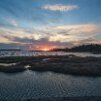
Anyway heres almost the only shot I took with it...


30081872836_9283bfb10c_c.jpg

Lagging behind by John Norton, on Flickr

Link to post
Share on other sites

Create an account or sign in to comment

You need to be a member in order to leave a comment

Create an account

Sign up for a new account in our community. It's easy!

Register a new account

Sign in

Already have an account? Sign in here.

Sign In Now
  • Similar Content

  • Posts

    • I also use a Nikon to GFX Fringer and it works very well.  24mm f/1.8 vignettes so best used on 35mm mode.  50mm f/1.8 covers the entire frame very well with no issues and is a superb little lens. 105mm Sigma vignettes slightly but is perfectly usable. 300 f/4 likewise the 105.  I have a 70-200 f/20+.8 incoming to test so will report back but I'm expecting a little vignetting.  Even in 35mm mode the image is still 60MP and if you're prepared to manually crop and correct you can get 80-90 MP images.  I also have a C/Y to GFX adapter.  The 24mm Sigma Superwide vignettes strongly. Ditto 28-80 Zeiss Sonnar. 80-200 f/4 Sonnar is perfectly usable. All work fine as 35mm mode lenses.  I also have an M42 adapter which I tried with the Carl Zeiss Jena 135mm f/3.5 with good results. 
    • Thank you. I will research it.
    • Ahh, the infamous brick wall photos… 😀 According to internet lore, if the dng converter does not properly apply the corrections, you can have it apply custom profiles that should work for you. How to do that is waaaaaay outside of this comment’s scope, but there are plenty of sites listed in the search engines that step you through the processes. Best wishes.
    • Jerry Thank you very much. That is extremely helpful. It seems that the camera and the lens have the latest firmware update, so it appears that the corrections should be applied automatically. The lens arrived this afternoon and I took some quick test shots, in which the correct lens information appeared in the EXIF files, so that sounds good. I used Adobe DNG converter to convert the Raw (RAF) files, and then opened the DNG files and saved them in PSD format. However, with a beautiful, clear, cloudless blue sky, there were no lines near the edges to check if distortion had been corrected. Another day I plan to photograph a brick wall. Thank you for your help.
    • Typically you need to make sure the lens is compatible with the camera, i.e. check the lens compatibility charts for your camera, then make sure the respective firmwares are updated so older issues are resolved. After that, each lens has a manufacturer’s profile which will be embedded into the raw file meta data for the images captured using that lens. From there, it is up to the raw conversion software to apply the lens correction to the image. Different converters do that differently, some automatically, some only if a setting is turned on. For in-camera jpegs, the on-board converter does the corrections automatically, assuming the camera recognizes the lens, it applies a generic profile otherwise. I do not know if that can be turned off or not.
×
×
  • Create New...