
Jump to content

Recommended Posts

Hi everybody,


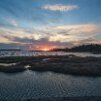
Last night, I see a beautiful sky and fortunately I just have my tripod and Fuji XT-1 with 18-135 zoom with me. So I decide to take my first shot at night.


I was slightly disappointed by a strange artefact I saw on my picture and I decide to ask the question to the expert of this forum...


When I put maximum clarity on my shots (and it's also noticeable without), I see a light circle on the picture much more noticeable in the thumbnail or when you are far from your screen.


Don't look at the image quality, it was just test shot.


EXIF : 18mm 15 sec f3.5 iso 3200 


Anybody knows why this circle appears ?


Welcome, dear visitor! As registered member you'd see an image here…

Simply register for free here – We are always happy to welcome new members!

Link to post
Share on other sites

It's a RAW shot edited with LR and the I tried to deactivate lens correction and the circle remain... actually in didn't notice any change in the image by unchecking lens correction profile in LR...

maybe environment light pollution but it was pretty dark around me.

I never noticed this problem in daylight condition.

Very strange ! Did you ever tried to do astrophoto with the 18-135 ?

Edited by Benj2000
Link to post
Share on other sites

To test if that come from light pollution or my lens, I just took a shot of a white wall in low light condition and the same circle appeared (to better see it you have to look a thumbnail of the jpg or step back from your screen)


Do you think it's normal for a 18-135mm lens @18mm or is it abnormal and a problem in the lens?

Welcome, dear visitor! As registered member you'd see an image here…

Simply register for free here – We are always happy to welcome new members!

Link to post
Share on other sites

I searched flickr for night shots done with the 18-135, and I didn't find anything that resembles your problem.


As Vidalgo said, it might help to see in camera jpegs. Maybe you could put one of the RAW files back on a sd-card and put it in the camera to create two jpegs via the built in RAW converter, one with the lens modulation optimizer turned on, and one without.

Link to post
Share on other sites

Good idea, I've already tried to develop in the XT1 with lens modulation deactivate by with the same issue! :(

What do you think of the white wall image (aka flat frame).

There is some vignetting but I also notice the same dark circle in the center. Especially visible in small format or far from the screen. Is it normal ? The lens modulation have been deactivated....

Edited by Benj2000
Link to post
Share on other sites

If it were a normal feature of the lens (fuji lenses, especially the cheap ones like the 18-135 or the newer 23/2, 35/2, 50/2 rely heavily on postprocessing in software), the lens modulation optimizer should correct it, at least a bit. If it does not, the lens probably has a problem. On the other hand, such high clarity levels are not normal either. Is the white wall image straight from camera? And have you tried other focal lengths?

Link to post
Share on other sites

looks like vignetting to me.  Maybe it's the lens... Does this occur in daytime shots?  Bad copy?  


EDIT: Looking at the wall image again I'd say it's a lens problem.

Edited by jlmphotos
Link to post
Share on other sites

"Did you ever tried to do astrophoto with the 18-135 ?"


Not the lens to use, I have the Samyang (Rockinon) 12mm f/2 for astro photography with the XT1, which incidentally is fantastic for astro work, I tried first with my 14mm, I wasn't entirely happy with the results so bought the Samyang.  Sample attached. EXIF 25s @ f/2 ISO 4000, Manual exposure and focus, bulb setting, remote, tripod.


Hope this helps, I have that lens that you used and have had no issue with it for normal photography.


Welcome, dear visitor! As registered member you'd see an image here…

Simply register for free here – We are always happy to welcome new members!

Edited by mcdesign
Link to post
Share on other sites

  • 3 months later...

I think it's simply a limitation of the lens. I'm not sure it's officially called vignetting, but that's how I call it! As far as I know, every lens has this kind of issue, more or less pronounced, with different shapes and effects.


Here is a picture of my wall with my 18-135mm (wide open, fastest shutter speed available). I moved the sliders to extreme values to reveal that ring:


Welcome, dear visitor! As registered member you'd see an image here…

Simply register for free here – We are always happy to welcome new members!


Now, nobody really use these extreme values in real life. I seldom use the clarity slider...


However, you can use the "Dehaze" slider, which does a very good job in adding more contrast and revealing the stars, without turning the photograph into a Jackson Pollock painting. In Lightroom > Develop, it's in the "Effects" menu.

Edited by konzy
Link to post
Share on other sites

I think it's simply a limitation of the lens. I'm not sure it's officially called vignetting, but that's how I call it! As far as I know, every lens has this kind of issue, more or less pronounced, with different shapes and effects.


Here is a picture of my wall with my 18-135mm (wide open, fastest shutter speed available). I moved the sliders to extreme values to reveal that ring:


attachicon.gifScreen Shot 235.jpg


Now, nobody really use these extreme values in real life. I seldom use the clarity slider...


However, you can use the "Dehaze" slider, which does a very good job in adding more contrast and revealing the stars, without turning the photograph into a Jackson Pollock painting. In Lightroom > Develop, it's in the "Effects" menu.

Unfortunately, the Dehaze filter adds a lot of noise, which is already a problem with night photography.

Link to post
Share on other sites

I really don't think a lens hood could create white circles nor prevents them  :) I haven't use any during my test, and the camera wasn't facing any light source, just the wall. It's just a design flaw.


Unfortunately, the Dehaze filter adds a lot of noise, which is already a problem with night photography.


Dehaze doesn't add any noise. It might make the existing noise slightly more noticeable, due to the enhanced contrast, but so does changing the curve.


Here is an example of a SOOC JPEG, and the same JPEG with dehaze at some extreme value (+100):


Welcome, dear visitor! As registered member you'd see an image here…

Simply register for free here – We are always happy to welcome new members!


The noise on the right was already there, and is barely more noticeable. Of course, one could diminish the noise on this picture by using noise reduction, or stacking frames.

Edited by konzy
Link to post
Share on other sites

  • 1 month later...
  • 3 weeks later...

"Did you ever tried to do astrophoto with the 18-135 ?"


Not the lens to use, I have the Samyang (Rockinon) 12mm f/2 for astro photography with the XT1, which incidentally is fantastic for astro work, I tried first with my 14mm, I wasn't entirely happy with the results so bought the Samyang.  Sample attached. EXIF 25s @ f/2 ISO 4000, Manual exposure and focus, bulb setting, remote, tripod.


Hope this helps, I have that lens that you used and have had no issue with it for normal photography.

I use the same lens ie Rokinon 12mm f/2 for all my astrophotography work, as the FX 18-135 and using high ISO is just not the right lens for the job.

Link to post
Share on other sites

  • 1 year later...

hi there, i have exactly the same rig as you, and strangely enough, i get that exact anomaly on my images of 15sec or more exp,  on inspection i have determined that the 18-135mm lens feels slightly loose on my x-t1... i`m going to be attempting night shots soon with a 35mm prime lens on the same body to see if the anomaly is still there

Link to post
Share on other sites

Create an account or sign in to comment

You need to be a member in order to leave a comment

Create an account

Sign up for a new account in our community. It's easy!

Register a new account

Sign in

Already have an account? Sign in here.

Sign In Now
  • Posts

    • Welcome, dear visitor! As registered member you'd see an image here…

      Simply register for free here – We are always happy to welcome new members!

       
    • Anyone out there have any experience/feedback on the Laowa 55 mm tilt shift? I’d be using it on the GFX 50s ii. 
    • Hi, I'm researching a gimbal to get someone as a present & they use a Fuji XS-10. I did a quick search of previous threads on gimbals but all of them seem to either get no replies or spammed by a link to an Amazon list. I'd appreciate any comments from folks who've actually used specific gimbals with the XS-10. I'm aware that some, such as certain models from Zhiyun, DJI & FeiyuTech either don't say that they are fully compatible with the XS-10 but other sites say they do work ok but some functions don't. It's quite difficult to work out which functions work & which don't. Thanks.
    • Welcome, dear visitor! As registered member you'd see an image here…

      Simply register for free here – We are always happy to welcome new members!

       
    • This was snapped during a lunch.  Total shooting time—a few seconds. We so often read that a proper "portrait" should be snapped with a longer than normal lens, a low ISO to get lots of detail, and have a soft light held up above the head, and slightly to the side. The key, in my opinion, is always carry a camera.  Have your camera available to capture candid, authentic photographs.  Available light, no posing.   This portrait used 2000 ISO, the lens wide open at f4, and 1/100 sec. to stop any movement.  I didn't even take time to compose—I just snapped.  I leave the "Face Detection" on unless I'm photographing a landscape or subject other than a person. The GFX100RF has the equivalent of a 28mm lens.  The large sensor renders fine detail even at fairly high ISO ratings.  And the drawing of the lens is just perfect in my opinion.  It was set to B & W, with slightly reduced sharpness and clarity (set in-camera).  Ideal for "portraits."  Now, for some subjects I will likely increase the sharpness and clarity to the normal setting.  The camera is new, and I'm still experimenting with it.

      Welcome, dear visitor! As registered member you'd see an image here…

      Simply register for free here – We are always happy to welcome new members!

×
×
  • Create New...