
jerryy
-
Posts
1,926 -
Joined
-
Last visited
-
Days Won
304
Content Type
Forums
Gallery
Store
Everything posted by jerryy
-
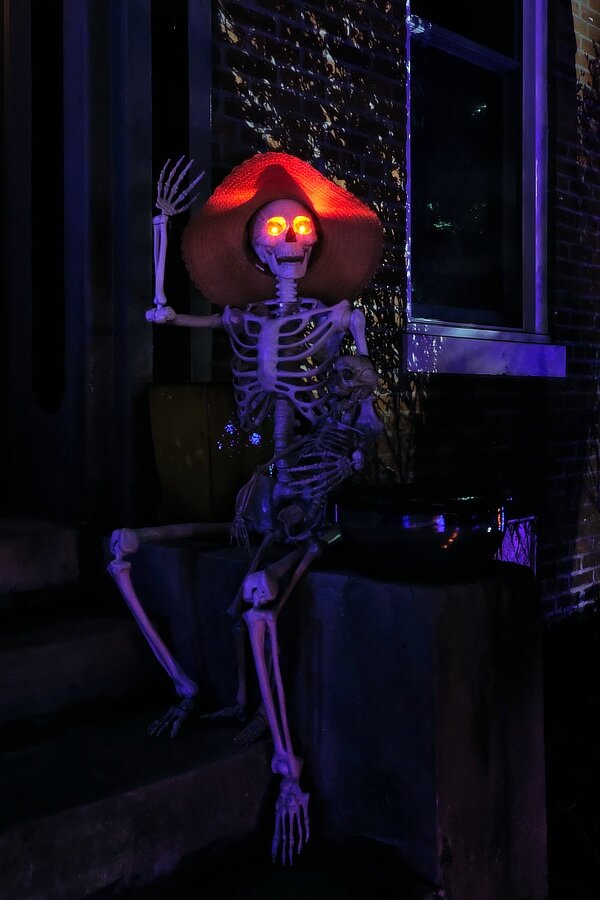
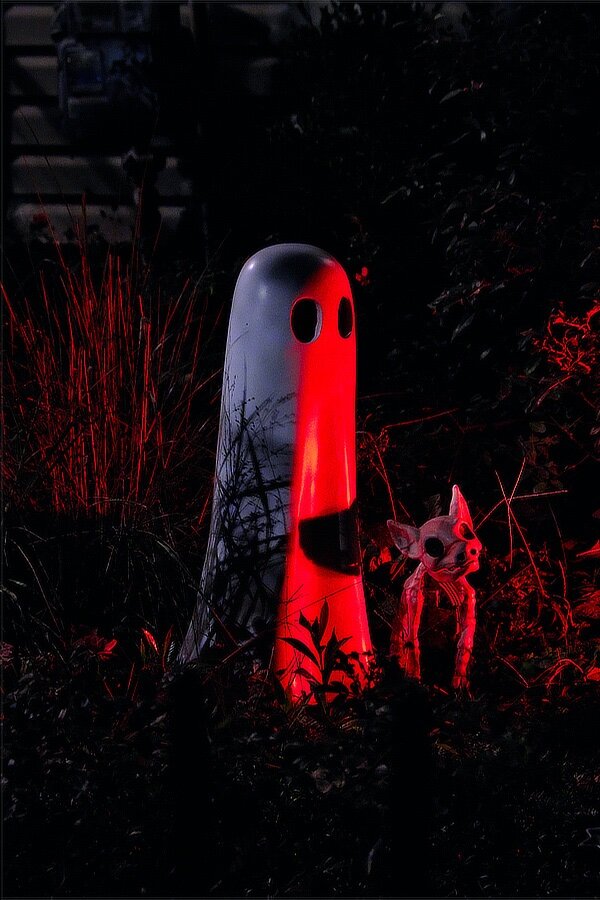
Ghosts and goblins and all sorts of fey critters are stirring again. It is that time of the year. Be careful, they will soon be out and about... Boo!

-
I have a copy of Tamron’s 150 - 600mm G2 lens. It has really good image quality and is easy to use. I have heard the one you are asking about is similar. Will you be able to test it? The only drawback for me with my lens is after carrying it around for a while, it gets heavy and so on the tripod it goes. Also, it was not a FX mount lens, so I use a Fringer smart adapter, but that has never been a problem.
-
A little late to the discussion, but in addition to the reasons listed by @Astigmatism, hard stops at infinity might wreck the lens. Those mechanisms are big and “heavy”. If the autofocus motor is pushing it at full speed when it hits the stop, things could… well… go awry. So it safely coasts past the usual endpoint before heading back in the opposite direction.
-
High-contrast scenes creating too dark JPGs with X-T50??
jerryy replied to Tvir's topic in Fuji X-T5 / Fuji X-T50
if you are shooting jpeg images (hobby photos as you called them) keep in mind the film simulation applies tone curves even at DR400. Try experimenting with the different simulations to see which is pleasing for a situation. -
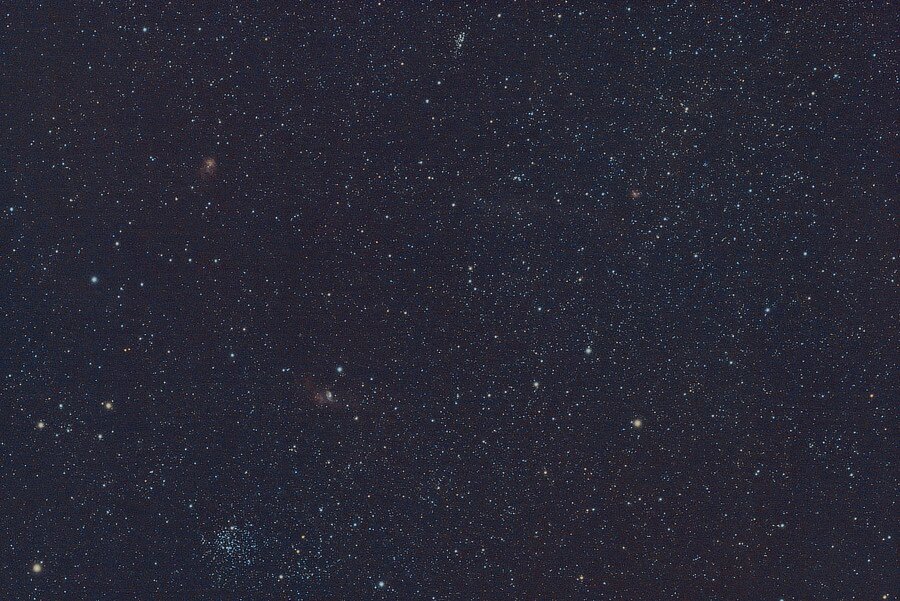
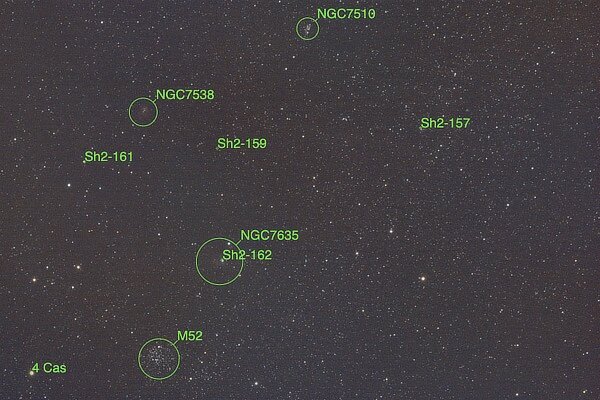
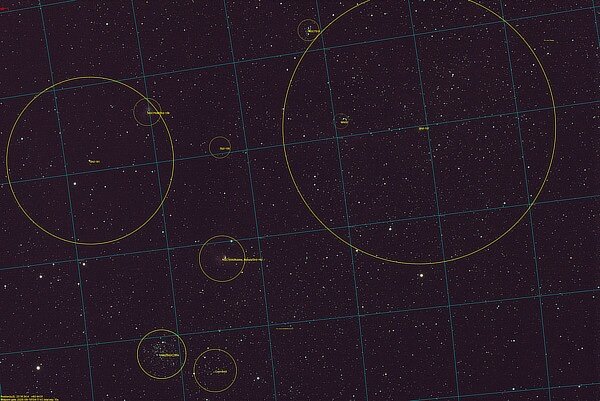
Many star-gazers see Constellation Cassiopeia riding high in the autumn sky as a "w" or "m" shape. It also sits next to Constellation Cepheus which holds some very beautiful clusters and nebulae. One is the Lobster Claw Nebula (Sh2-157): https://www.astronomy.com/observing/deep-sky-dreams-sharpless-2-157/ Other favorites include the Bubble Nebula (NGC 7635): https://svs.gsfc.nasa.gov/12247 and the Northern Lagoon Nebula (NGC 7538); https://en.wikipedia.org/wiki/NGC_7538 This region has some lovely clusters you can see simply by looking up in the right place, while using binoculars (or if you have very good night eyesight, just look up) for them. Messier Object M52: https://freestarcharts.com/messier-52 and NGC 7510: https://theskylive.com/sky/deepsky/ngc7510-object This exposure, timed at just under 54 minutes in Bortle 9 skies, almost hints at the lobster's claw, but really it needs more exposure time to make it visible in photos, darker skies would also help. If you search the internet, you can find some fantastic renditions.
-
The fans are flying in to get good seats for the next round of dragonfly gymnastics... The competitor is not ready, apparently something on the equipment is not right... Everything is now sorted, ready to go... And THERE IT IS!!! The Handstand!!! Of course with that many arms, how hard can it be?
-
X-T5 blurry corner-to-corner pictures?
jerryy replied to mjoseph67's topic in Fuji X-T5 / Fuji X-T50
I do not think adding this will help you much, but it may give you some perspective. After reading your posts in this thread several times to make certain I am not missing anything, the numbers you are reporting are in line with those reported across the broad range of digital cameras by various manufacturers. Nikon, Canon, Sony, Leica, Fujifilm, etc. Use your favorite search engine to lookup (brand) af keeper rate. People are reporting af keeper rates now in the high ninety range. You will find page after page of tips and technique improvements for improving the keeper rate. As well as page after page from the manufacturers touting their new camera models with improved af keeper rates. af is vastly improved, but it still is not perfect. It maybe that there is something slightly wrong with either your camera body or the lens, but I suspect that if you send it in to get it checked, it probably will be okay. Getting a new XH2 will make your camera dealer happy and it is a fantastic camera, but, …, getting it solely in hopes of better keeper rates is probably wishful hoping. For what it worth, (more of what you probably do not want to hear) back in the film days, a af keeper rate over 50% was considered great. Those expensive film rolls certainly did not hold the thousands of shots memory cards hold. I very well understand the thought of maybe missing that one shot, try when possible to push the shutter button several times, those cards hold a lot of shots and it is easy to delete the extras. I hope you get this resolved in a way you like. -
Can anyone explain what is happening here?
jerryy replied to Jon Wood's topic in Fuji X-H1 / Fuji X-H2s / Fuji X-H2
If you look on the web page for this lens: https://www.voigtlaender.de/lenses/x-mount/23-mm-11-2-nokton/?lang=en the information (in the data communications section) implies the lens has limited compatibility with the X-Pro 2 but works fine with the X-H1. It sounds like the X-Pro 2 does not have a built-in lens profile for your lens. That profile tells the camera or the raw developing software how to correct various distortions, such as vignetting, barrel or pincushion errors in the image, etc. Just about every lens has these problems, the lens profile is used to change those problems back into good images. If you shoot using raw images, you may be able to find a lens profile for your raw development software and get better results. hth, p.s. Welcome to the forum. -
Autumn is hanging around ready to take over summer's job. Locally, it will be at least a month or longer before widespread fall colors are ready. But it is officially Autumn. And some flora are not waiting to show off their pretty colors ...
-
Have you tried using the sensor swab (and liquid) approach? The in-camera sensor cleaning is limited in what it can accomplish. There is no way for the dust it knocks off of the sensor to leave the body, so that dust will swoosh around inside the body and as soon as the camera is moved, some dust lands back on the sensor. Those dust blower bulbs can remove some dust as long as the compartment is sealed so that dust leaves and does not just move to other areas in the camera. These though, will not remove very much dust that has strong electrostatic charges almost seeming to glue the dust to the sensor. Try the swab approach as well as cleaning the lens’ rear glass and see if that helps. p.s. Welcome to the forum.
-
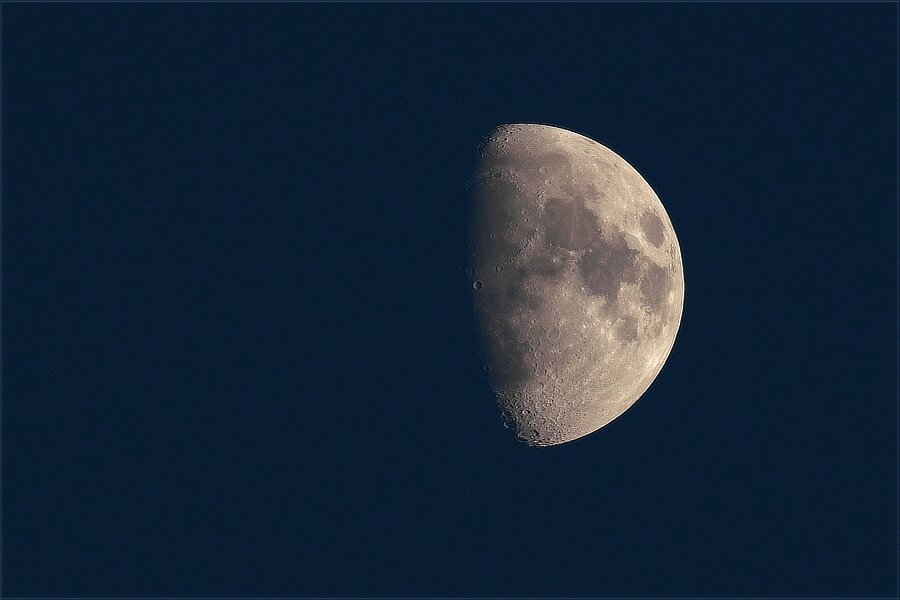
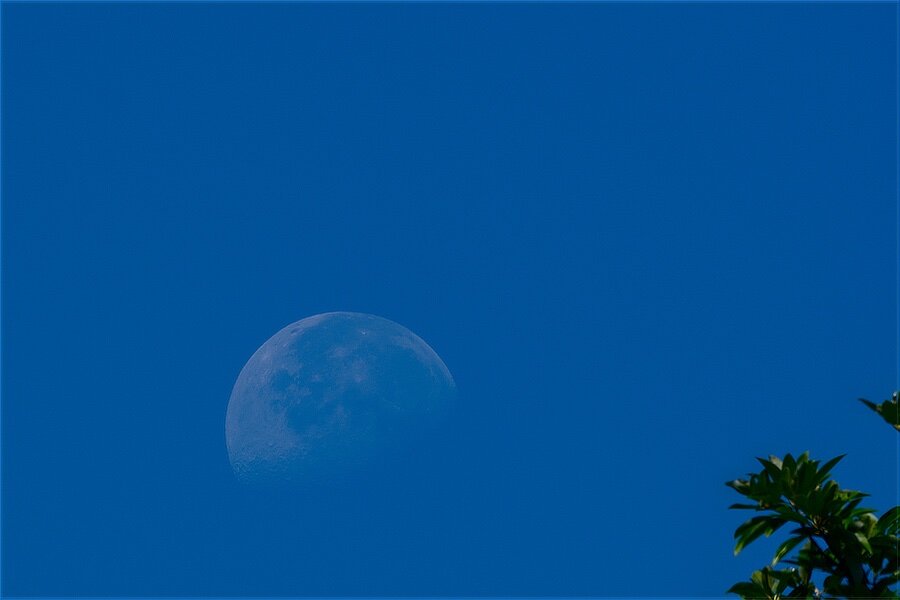
Blood Moon and More... This moon is waxing up to be September's Corn Moon. This year, the Corn Moon offers more than telling us it is harvest time. This moon will be the longest blood moon of the year. It happens September 7 - 8 (The Earth's shadow eclipses the moon.). Folks in Australia, Asia, Africa, and Europe get to see a lunar eclipse. https://www.timeanddate.com/news/astronomy/moon-september-2025 After the waxing comes the waning... Waning Corn Moon.
-
Incredible! More please. Welcome to the forum.
-
Welcome to the forum. Most of the camera bodies can use up to nine exposures to make the final image. https://www.fujifilm-x.com/en-gb/learning-centre/understanding-multiple-exposure-photography/ Would saving the separate raw images and combining them using an image editor be the same as what you are asking about doing? Not to overlook the possibility of editing the separate images before joining them.
-
Jefferson County, Kentucky, USA
-
Can't pair my XT-3 with my Pixel 9 Pro smartphone
jerryy replied to TheFella's topic in Fuji X-T3 / Fuji X-T30
I hope you are able to get this working in your favor. As a bonus, the card readers mostly are faster and easier ways to move images from the camera to the computer. -
Can't pair my XT-3 with my Pixel 9 Pro smartphone
jerryy replied to TheFella's topic in Fuji X-T3 / Fuji X-T30
Does your computer have a free usb port? If so, you should be able to use an external card reader (either type a or type c connector — the same as your computer’s port) plugged into the computer to put the firmware update on the camera's card and then upgrade the camera. These readers are fairly easy to find, even big box stores carry them for a variety of budgets. Or, you can find them online as well. p.s. Welcome to the forum. -
It is about time you put those in a book! 😁
-
Awesome! More please.
-
Welcome to the forum.
-
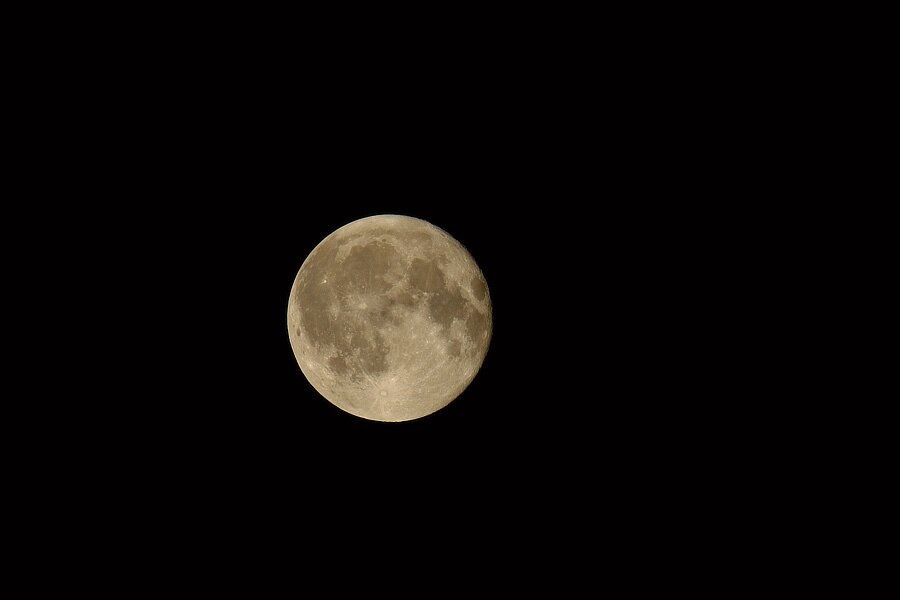
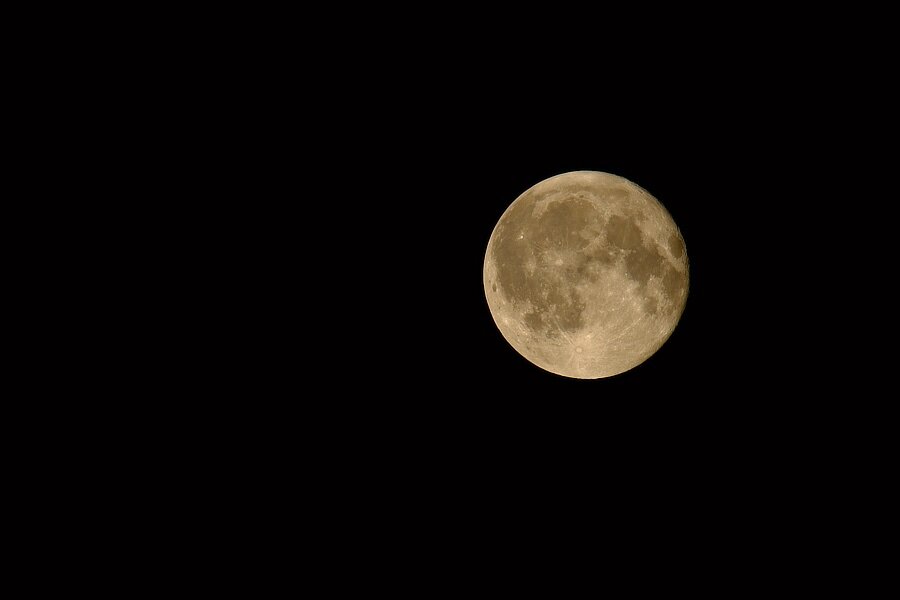
Sometimes questions about cameras' resolution and astrophotography pop up. More often the questions are noise related, but 'are more pixels better' has its fans. 'Sometimes, it depends' is about the best answer out there. I think maybe it is better to instead ask back 'do you use your camera for daytime photography as well and do you like the images you get?' If so, then stick with the camera you have. Everything from pixel size to smoke levels or turbulence in the atmosphere to the telescopes' optical limits and so much more impact how images turn out. There are so many rabbit holes to fall into, that if you go down into them, it may be many years before anyone sees you come up for air. 😄 There are two things though that can be said 'with certainty' about using a higher resolution camera in place of your current gear: 1. The angle of view becomes wider in the higher resolution camera's image. Think of it as if you use a normal lens to get a photo, then put on a wide angle lens and take the same photo. The region covered by the higher resolution camera is wider. 2. The supporting equipment; mount, tripod, image processing gear, etc. etc. become much more [expletive deleted] expensive 😇, that is you need a sturdier tripod and mount, more computer -- drive space and powerful processors, and so forth and so on. From last night's Sturgeon Moon, an example: Both of these images are taken of the same subject using the same lens, at just about the same time, but with two different camera bodies. I got a first set of images, took the first camera body off of the lens, put the second camera body onto the lens and got a second set of images. Tamron 150-600mm at 600mm. F16, 1/60s, ISO 160. 6240 pixels x 4160 pixels. Tamron 150-600mm at 600mm. F16, 1/60s, ISO 200. 4896 pixels x 3264 pixels. Okay, so they look the same or close enough. That is because both images have been scaled to 900 pixels wide. That and the essentially empty backgrounds are misleading. Here are crops from the full size images: 1801 x 1505 pixels (scaled to 900 pixels wide in this image) from 6240 x 4160 pixels leaves 4439 pixels wide for other stuff. 1178 x 1205 pixels (scaled to 900 pixels wide in this image) from 4896 x 3264 pixels leaves 3718 pixels wide for other stuff. If you like your camera's images, use it for daytime and night photography. There is not much good in chasing resolution hoping more pixels will better resolve astronomical objects just like they do in the daytime images, making the fluff on distant bird feathers pop out. As a thought, those beautiful images from the Hubble are made using "The UV/optical channel has two CCDs, each 2048×4096 pixels, while the IR detector is 1024×1024." (*1) The new James Webb Telescope is using an array of 4 megapixel cameras similar to how terrestrial giga-pixel images are made. (*2) I believe other agencies such as the European Space Agency (ESA) do something similar with their gear. *1 https://en.wikipedia.org/wiki/Wide_Field_Camera_3 *2 https://space.stackexchange.com/questions/58179/4-megapixels-seems-rather-low-why-werent-james-webbs-sensors-updated-to-highe Sturgeon Super Moon: https://nasaspacenews.com/2025/08/sturgeon-moon-2025-two-magical-nights-under-one-full-moon/ edited to upload the correct cropped images.
-
Welcome to the forum. Can you post an image to demonstrate what you are getting? Unfortunately there are a lot of components where a problem in any one of them will ruin an image. You may have already tried this, but here are some things: Tripod and mount (mount, in this case, probably will be the ball head). Putting rubber feet on the tripod can help for some surfaces as can installing the spikes that often come with tripod kits and make sure the legs are firmly smooshed into the ground. Not all tripods do well at suppressing vibrations for long exposure photography, they are fine for fast shutter speeds. Any looseness in the locks will let the camera shake. Whatever the ball head’s weight limit is, try not to load it beyond one-half of that rating. For example, if the ball head (and tripod) are rated to hold 20 lbs. —- about 9 kilograms —- only put up to about half that weight, 10 lbs. —- about 4,5 kilograms. Definitely turn off all image stabilization tech, as well as any pixel shifting tech. How much surface area is sticking up into the air matters. If the camera is up where any breeze, no matter how slight, can catch it, the camera can sway. The sturdier the tripod with the camera mounted as low to the ground as you can get, the better the images will turn out. If you have a neck-strap or similar on the camera, watch it as session goes on. If the strap is moving, the camera can be swaying. I am guessing you are using camera lenses. There is something called focus creep and something called zoom creep. Unless you have the lens perfectly horizontal, and even if you do have it that way, as the temperature changes, the focus will change and you will have to reset it. Are you using the electronic shutter? Sometimes using the mechanical shutter can cause a slight vibration the tripod will not absorb so the vibration goes back into the image. This is more noticeable for highly magnified subjects and usually for not landscape work, but it is there. Are you using the built in interval timer? One thing to note with landscape work, bushes and trees move and once you get past ten seconds or so, your image will really show that smearing motion blur. I hope this helps.
-
Australia, SE Asia and South Africa, that is quite an itinerary in front of you. You are going to make some folks jealous 😀. There are places especially in South Africa, that will rent lenses to you while you are visiting. That saves a lot of wear and tear on your gear and gives you some peace of mind regarding damaged/lost equipment. Take this advice with the necessary heaping shovel of salt, but from what you are describing, try a wide zoom, a medium normal zoom and a long prime. As mentioned, you may be able to rent one or more of these in each region and instead of lugging gear, stuff the luggage with memory cards and batteries with universal chargers. In the mean time, show us some autumn shots! edit: Add a few smart adapters to the list, then you can use cough third party cough lenses as well, all while traveling light.
-
Welcome to the forum. The Sigma lens is fairly new on the scene, the Fujifilm lens has been available for a while. Here are a couple of reviews that may help you decide: https://petapixel.com/2025/03/13/sigma-16-300mm-f-3-5-6-7-dc-os-review-a-long-awaited-return/ https://www.dpreview.com/reviews/field-review-fujifilm-xf-70-300-f4-5-6-r-lm-ois-wr The Chris Niccolls mentioned in the reviews is the same person. Please read these closely, especially if you are essentially wanting to get the lens, learn its basic familiarity and then take it on your trips. It can be really frustrating to find out during the journey that some of the negatives are vastly out weighing the positives. Are you wanting to try saving some weight by taking just one lens, a super zoom lens? If not, you already have the wide end covered with your present line up.
-
Auto focus on screen
jerryy replied to Jezzsoul's topic in Fuji X100VI / X100 / X100S / X100T / X100F / X100V / Fuji X70
Touch shooting is probably turned on. If you need it, that option is nice, but otherwise it can get in the way. https://fujifilm-dsc.com/en/manual/x100v/about_this_camera/touch/index.html p.s. Welcome to the forum.