Jump to content

Recommended Posts

G'day,


I have a Fujifilm X-T2, which is my first X-Trans camera – so this question might just reflect my lack of experience…


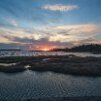
I took a photo of the ocean, using the standard camera settings with an compressed raw and JPEG image written to the camera's memory card. A small version of the JPEG image is shown here:


Welcome, dear visitor! As registered member you'd see an image here…

Simply register for free here – We are always happy to welcome new members!


If I develop the compressed raw file into a JPEG using software outside the camera, there seem to be magenta and green colours in the white highlight areas of the waves. In comparison, the in-camera JPEG image shows just white highlights.


I've included a cropped section of my ocean photo here to show the difference:


I tried using both Silkypix DS Pro 7, Affinity Photo and Iridient Developer (all for Mac). In each case I tried to use the default/standard settings in the program. The results were similar with the colours. I wanted to try DCRaw, but it didn't seem to handle compressed-raw (RAF) files at all.


I'm not sure what software I should be using, and whether to suggest that Fujifilm should be releasing their in-camera raw-to-JPEG conversion software as stand-alone software that could be used outside of the camera.


Can anyone suggest what's going on here?


Thanks,


Warwick


Link to post
Share on other sites

Just after posting this message, I received a call from Fujifilm support, who were very helpful, and said that it's just chromatic aberration, which is corrected automatically in the JPEG image produced by the camera, but not in the external software I was using.


I had wondered about chromatic aberration, but hadn't noticed it being quite so obvious in my photos before, so I thought there might have been something else going on.


It still leaves me a bit unsure about what's the best raw development software to use. I've downloaded demos of everything I can get my hands on, and will have to do some more testing!

Link to post
Share on other sites

Many of the raw developers and editing software out there should have a function to remove CA, as they're quite common. Lightroom does an excellent job, just to name one. But if you searched which editing suites could handle it, I'm sure you'd find a decent list.


Best of luck!

Link to post
Share on other sites

Create an account or sign in to comment

You need to be a member in order to leave a comment

Create an account

Sign up for a new account in our community. It's easy!

Register a new account

Sign in

Already have an account? Sign in here.

Sign In Now
  • Similar Content

  • Posts

    • Welcome, dear visitor! As registered member you'd see an image here…

      Simply register for free here – We are always happy to welcome new members!

       
    • Anyone out there have any experience/feedback on the Laowa 55 mm tilt shift? I’d be using it on the GFX 50s ii. 
    • Hi, I'm researching a gimbal to get someone as a present & they use a Fuji XS-10. I did a quick search of previous threads on gimbals but all of them seem to either get no replies or spammed by a link to an Amazon list. I'd appreciate any comments from folks who've actually used specific gimbals with the XS-10. I'm aware that some, such as certain models from Zhiyun, DJI & FeiyuTech either don't say that they are fully compatible with the XS-10 but other sites say they do work ok but some functions don't. It's quite difficult to work out which functions work & which don't. Thanks.
    • Welcome, dear visitor! As registered member you'd see an image here…

      Simply register for free here – We are always happy to welcome new members!

       
    • This was snapped during a lunch.  Total shooting time—a few seconds. We so often read that a proper "portrait" should be snapped with a longer than normal lens, a low ISO to get lots of detail, and have a soft light held up above the head, and slightly to the side. The key, in my opinion, is always carry a camera.  Have your camera available to capture candid, authentic photographs.  Available light, no posing.   This portrait used 2000 ISO, the lens wide open at f4, and 1/100 sec. to stop any movement.  I didn't even take time to compose—I just snapped.  I leave the "Face Detection" on unless I'm photographing a landscape or subject other than a person. The GFX100RF has the equivalent of a 28mm lens.  The large sensor renders fine detail even at fairly high ISO ratings.  And the drawing of the lens is just perfect in my opinion.  It was set to B & W, with slightly reduced sharpness and clarity (set in-camera).  Ideal for "portraits."  Now, for some subjects I will likely increase the sharpness and clarity to the normal setting.  The camera is new, and I'm still experimenting with it.

      Welcome, dear visitor! As registered member you'd see an image here…

      Simply register for free here – We are always happy to welcome new members!

×
×
  • Create New...