Jump to content

Recommended Posts

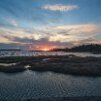
I just got my new 56mm yesterday, got to try it out this morning. Pretty happy with the swirly bokeh in the second photo.
Thought I'd share....


Welcome, dear visitor! As registered member you'd see an image here…

Simply register for free here – We are always happy to welcome new members!

Link to post
Share on other sites

That looks nice, is this the normal 56 or the APD version?

I went with the 'normal' - definitely sufficient for my needs. Ken Rockwell states that the "APD lens adds a non-removable dark-edged filter inside the lens next to its diaphragm. Otherwise it's the same lens as the original the Fujinon 56mm f/1.2. This filter helps improve bokeh wide-open, but also loses some light. It doesn't make this an f/1.2 lens with a smooth aperture edge, it becomes the same as an f/1.7 lens with a smooth, instead of hard, aperture edge."

I figured the extra bokeh wasn't worth the $300 increase in price.

Edited by gussie
Link to post
Share on other sites

I love when this lens gets the swirly bokeh. I'm not sure if that has anything to do with coma or not - anyone know? I was reading about wider lenses and astro photography and that got me thinking about it. Either way, I love the look.


I considered the APD version as I mostly use the 56 for portraiture, but I went with the normal one for the lower price and potentially faster autofocus. Most times I see no real difference between the two, short of peeping bokeh at 100%. Where I do see a fairly large difference is with busy backgrounds like trees; the regular version still looks good, but the APD version is a lot softer and less busy. I don't necessarily find it better, just a different look.


I could definitely see owning both if I was a full-time photographer, or if I had lots of money. The regular version is the safer choice and better all-around lens, but the few times I think the APD would make a noticeable difference, it would be quite noticeable, IMHO.

Link to post
Share on other sites

Create an account or sign in to comment

You need to be a member in order to leave a comment

Create an account

Sign up for a new account in our community. It's easy!

Register a new account

Sign in

Already have an account? Sign in here.

Sign In Now
  • Similar Content

  • Posts

    • Thank you. I will research it.
    • Ahh, the infamous brick wall photos… 😀 According to internet lore, if the dng converter does not properly apply the corrections, you can have it apply custom profiles that should work for you. How to do that is waaaaaay outside of this comment’s scope, but there are plenty of sites listed in the search engines that step you through the processes. Best wishes.
    • Jerry Thank you very much. That is extremely helpful. It seems that the camera and the lens have the latest firmware update, so it appears that the corrections should be applied automatically. The lens arrived this afternoon and I took some quick test shots, in which the correct lens information appeared in the EXIF files, so that sounds good. I used Adobe DNG converter to convert the Raw (RAF) files, and then opened the DNG files and saved them in PSD format. However, with a beautiful, clear, cloudless blue sky, there were no lines near the edges to check if distortion had been corrected. Another day I plan to photograph a brick wall. Thank you for your help.
    • Typically you need to make sure the lens is compatible with the camera, i.e. check the lens compatibility charts for your camera, then make sure the respective firmwares are updated so older issues are resolved. After that, each lens has a manufacturer’s profile which will be embedded into the raw file meta data for the images captured using that lens. From there, it is up to the raw conversion software to apply the lens correction to the image. Different converters do that differently, some automatically, some only if a setting is turned on. For in-camera jpegs, the on-board converter does the corrections automatically, assuming the camera recognizes the lens, it applies a generic profile otherwise. I do not know if that can be turned off or not.
    • How does one make sure that Fuji's image correction is turned on to correct barrel and pin-cushion distortion on a GFX 100 or GFX100S when using the GF20-35? Is it only applied to the jpegs and not to the raw files? (I was surprised to discover the barrel distortion on the GF 35-70mm lens.) I normally shoot in raw with jpeg back-up and use the raw files, which I convert either in Affinity Photo 2 when editing with that program or in Raw File Converter Ex 3.0 by Silkypix if I wish to process the image in Photoshop CS6. (Adobe DNG is also a possibility.) Thank you for the help. Trevor
×
×
  • Create New...