Leaderboard


Popular Content
Showing content with the highest reputation on 08/07/2024 in Posts
-
Thank you for the warm welcome in the forum The 20 seconds are my experiences for images that are not tracked! With “our neighbors” it even worked ad hoc from the car roof with 15 seconds and a 10 second advance trigger! It was 80 KM west of Nantes France early late summer morning on vacation without a tripod or Vixen GP mount!. I use the camera to slow down, to balance out work; that's why I make slides like I did 40 years ; they're called JPgs ooc today! It shouldn't be work. . . . I use Olympus Master 2.3 (out of the first digital and af Cam system) for crop reduction for the web and here and there B/W conversion. The Sony (a7 + Canon FD Lenses) data will not be changed; Fuji allows itself to be occupied by Olympus; but the camera is called correct. If you mainly use TTartisan manual lenses, of course no lens data is given. I use the X-A1/2/3 because of its Bayer sensor and the compactness with TTartisan lenses. I must say I am a 23mm / 35mm looking guy how sametimes use the 35mm/50mm as a "Normal-Optic" ; -)1 point
-
Welcome to the forum. There are plenty of star trail exposure time calculators available for the various guidelines (“rules”), such as https://www.photopills.com/calculators/spotstars Put the body on a tracking mount and periodic error is the more important obstacle to keeping stars round. On a tracking mount, 3 to 5 minute exposures are typical for each frame for cameras that have the ability to store longer exposures without over saturating the pixels. For some camera bodies, a 20 second limit is a good idea, but that is more due to the full well depth size for that camera body rather than to prevent or allow trailing. 20 seconds for some bodies is the limit where brighter objects begin losing color by over saturating, turning the pixels white, especially when shooting in jpg instead of raw.1 point
-

Astrophotography
jerryy reacted to newbie to fuji for a topic
Thank you so much, Jerry. I am so excited not only that I can use the camera for general photos and video, but also Astro. This has been a great investment for many years to come. I almost wanted to spend money on a dedicated Astro camera, but now I am confident in my purchase. I am planning on going to Mexico on a cruise, and I am intrigued to see if I can do Astro on a cruise ship. I have a balcony to try it out. Do you have any recommendations for a good intervalometer? I did notice that I can not use a 9v power for the x-h2. How do I charge for long exposures should I invest in a power bank?1 point -

X Raw Studio and WB Shift
SimonF reacted to Sleeping Dog for a topic
Resolved. User stupidity.1 point -
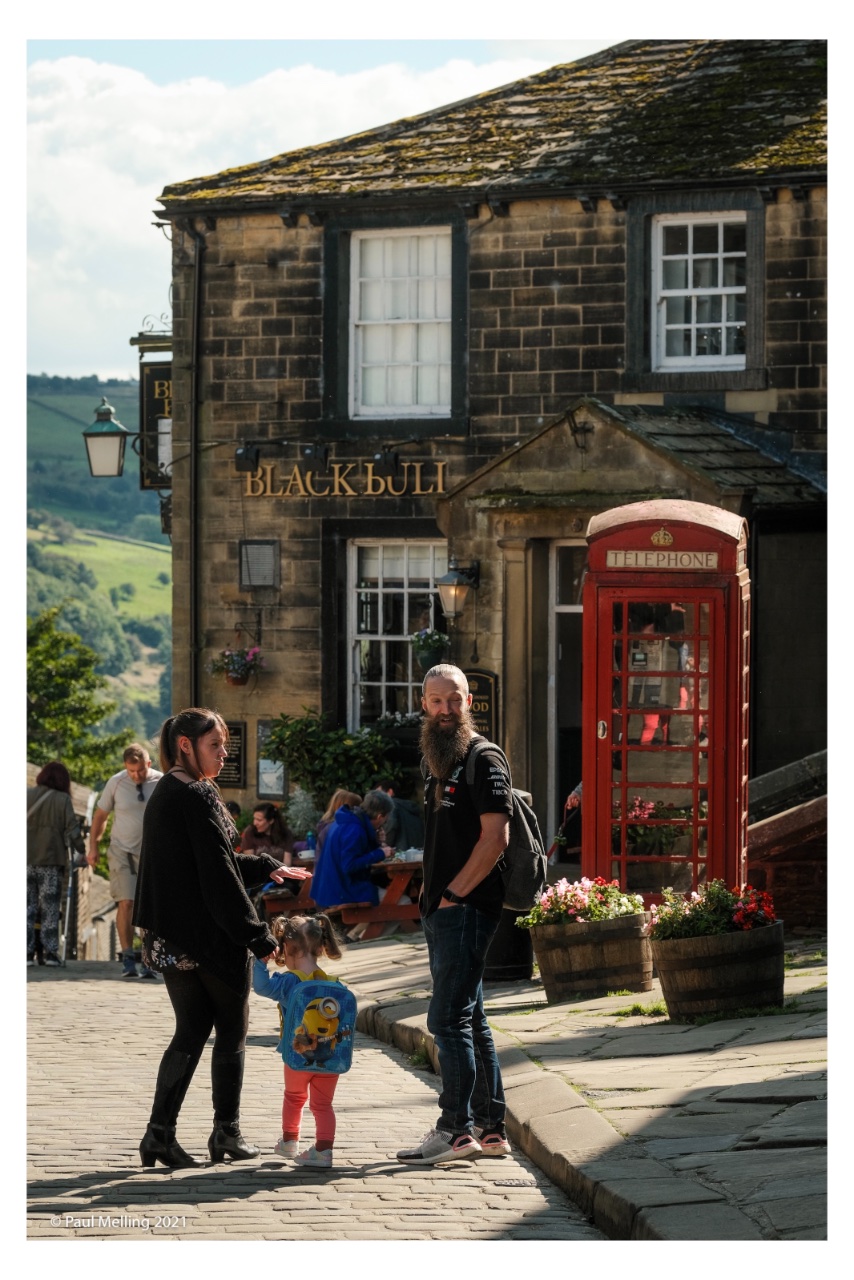
I had about 20 minutes or so in the pretty Yorkshire village of Haworth, best known as the home of the Bronte sisters (Withering Heights / Pride & Prejudice etc). Here are a few pics. All taken with X-Pro3 and 90mm lens.
 1 point
 -
If you are looking for a low cost approach, you can get very good results with DarkTable, Capture One (Fuji Express version is free), RawTherapee or the Fujifilm supplied Raw File Converter EX V3.0 <-- the name is close but it is different than the Raw Studio application. Each one has their benefits as well as learning curves. The Raw File Converter EX V3.0 comes very close to matching Fuji's in-camera engine. Each of these will give you the option to convert the RAF files into TIFF or JPEG files as you wish as well as giving you quite a few development options.1 point