

Giampaolo Masserano
-
Posts
447 -
Joined
-
Last visited
-
Days Won
81
Content Type
Forums
Gallery
Store
Everything posted by Giampaolo Masserano
-
From the album: Photos
-
From the album: Photos
-

From the album: Photos
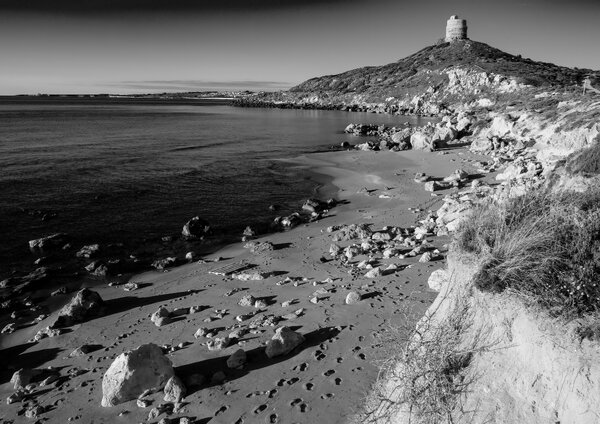
Unfortunately, this beach (like many others in the Sinis region) is experiencing a dramatic situation: a massive and partly inexplicable mosquito invasion, which is impacting not only the quality of life of locals but also severely impacting tourism. Spending even a few minutes on one of these beaches means being attacked by hundreds of hungry insects (and, in my opinion, larger than common mosquitoes). Besides the inconvenience of constantly having to swat them away, there is a real health risk because some of them can carry "Western Nile Fever," a disease that in some cases (fortunately very rare) can have serious consequences for the elderly or immunocompromised. One of the likely triggers of this phenomenon is the presence, after a strong storm in recent months, of tons of Posidonia oceanica that have settled on the shoreline and are difficult to remove. On still-warm autumn days, this damp, rotting carpet is the ideal environment for the proliferation of insects. My visit took place from December 12th to 15th, and given the time of year, I didn't expect to encounter a similar situation (which I hadn't encountered in the previous two years). I assure you, taking some photos was very difficult. The municipalities of Oristano and Cabras have implemented extensive disinfestation operations, which appear to have been successful: in Cabras (despite being surrounded by lagoons), mosquitoes are virtually non-existent, while their presence is massive on the beaches. Anyone wishing to delve deeper into the topic or who has understandable doubts about what I've written should consult the local press and TV reports. -

From the album: Photos
-

From the album: Photos
-

From the album: Photos
Unfortunately, this beach (like many others in the Sinis region) is experiencing a dramatic situation: a massive and partly inexplicable mosquito invasion, which is impacting not only the quality of life of locals but also severely impacting tourism. Spending even a few minutes on one of these beaches means being attacked by hundreds of hungry insects (and, in my opinion, larger than common mosquitoes). Besides the inconvenience of constantly having to swat them away, there is a real health risk because some of them can carry "Western Nile Fever," a disease that in some cases (fortunately very rare) can have serious consequences for the elderly or immunocompromised. One of the likely triggers of this phenomenon is the presence, after a strong storm in recent months, of tons of Posidonia oceanica that have settled on the shoreline and are difficult to remove. On still-warm autumn days, this damp, rotting carpet is the ideal environment for the proliferation of insects. My visit took place from December 12th to 15th, and given the time of year, I didn't expect to encounter a similar situation (which I hadn't encountered in the previous two years). I assure you, taking some photos was very difficult. The municipalities of Oristano and Cabras have implemented extensive disinfestation operations, which appear to have been successful: in Cabras (despite being surrounded by lagoons), mosquitoes are virtually non-existent, while their presence is massive on the beaches. Anyone wishing to delve deeper into the topic or who has understandable doubts about what I've written should consult the local press and TV reports. -
Looking for Full Frame lenses to adapt to GFX
Giampaolo Masserano replied to Joeyd's topic in Adapting lenses to Fuji X
I use a TECHART ring to mount Canon EF lenses on the GFX 50S-II and 100S-II, maintaining image stabilization and autofocus. The only limitation are lenses with a small rear element diameter that make it impossible to cover medium format. Fast lenses like the EF 85/1.2L or the 100-400L, however, work great. -

From the album: Photos
-

From the album: Photos
-

From the album: Photos
-

From the album: Photos
-

From the album: Photos
-

From the album: Photos
-

From the album: Photos
-

From the album: Photos
-

From the album: Photos
-
From the album: Photos
-

From the album: Photos
The mountain at top left is Monviso, known as the "Stone King." From its 3,841-meter height, it dominates the surrounding valleys and the entire Piedmont plain. -
The only real problem is the file size, which is truly enormous even when using JPEG (superfine). To reduce the amount of data, I skip the 4:3 aspect ratio and shoot in 3:2 or 16:9 (the number of horizontal pixels doesn't change, so sharpness isn't affected). You'll still need a powerful PC and a LOT of patience, especially if you'll be using denoising programs.
-
I think it also depends on the lens model. I also use a Manfrotto 055 for night photography or with filters: I've had poor results with the 45-100 because it's very biased toward the front and therefore sensitive to even the slightest disturbance. No problems with the 20-35 (not biased) or the lightweight 35-70 kit. A tip: to improve stability, there are accessories that screw onto the base of the camera with a forward-facing bracket that better supports the lens. In any case, camera shake is always a possibility...
-
I've had problems too, especially with a 45-100mm f/3.5-5.6 that produced a very annoying variable-frequency hissing sound. I sent it for service in Italy and was replaced with a completely silent model... but I had to wait over a month to get the exchange. The camera body can make some noise when using non-FUJI lenses: I sometimes use a Pentax 645 macro, and the noise coming out of the camera is the sensor image stabilization.
-
Palazzina di caccia di Stupinigi - Salone d'onore
Giampaolo Masserano posted a gallery image in Members Albums Category

From the album: Photos
Not far from Turin stands the "Stupinigi Hunting Lodge", surrounded by an immense park. Built by the Savoys, it is part of what is known as the "Crown of Delights," meaning all the Savoy residences in Piedmont. -
Anche io ho avuto problemi, soprattutto con un esemplare di 45-100 che produceva un suono sibilante a frequenza variabile molto fastidioso. L'ho inviato in assistenza in Italia ed è stato sostituito con un esemplare completamente silenzioso...ma ho dovuto aspettare più di un mese per ottenere lo scambio. Il corpo macchina può emettere qualche suono quando si montano obiettivi non FUJI: uso talvolta un Pentax 645 macro ed il rumore che esce dalla macchina è lo stabilizzatore sul sensore.
-
Secondo me dipende dal modello di obiettivo. Anche io uso un Manfrotto 055 per foto notturne o con filtri: con il 45-100 ho avuto risultati scadenti, perchè molto sbilanciato in avanti e quindi sensibile ad ogni minimo disturbo. Nessun problema con 20-35 (non sbilanciato) e con il leggero 35-70kit. Un suggerimento: per migliorare la stabilità esistono accessori da avvitare alla base della fotocamera con una staffa rivolta in avanti che sorregge meglio l'obiettivo. In ogni caso, il micromosso è sempre in agguato...