
Nero
-
Posts
286 -
Joined
-
Last visited
-
Days Won
3
Content Type
Forums
Gallery
Store
Everything posted by Nero
-
For landscapes and cityscapes, you can't go wrong with the 10-24mm. I have that and the 18-135mm for my 2 zooms, but for the situations you just mentioned, the 10-24mm is always on my camera. The only exception was a river boat architecture tour in Chicago where I used the 18-135 because of the ability to get details in some of the buildings. But if that's only a marginal part of your shooting style, get the 10-24.
-
This isn't something that fits my photography, but I thought others may find it interesting: http://www.theverge.com/2015/8/3/9088643/fuji-xt-1-ir-announcement
- 1 reply
-
- 1
-

-
I thought about buying an X100T, but I wanted a backup camera that could take interchangeable lenses in case something happened to my X-T1. I already had the 27mm, so I picked up an X-E1 body for $450 and put the 27mm on it. Wonderful purchase. My wife now uses that setup all the time and I take it when I want something compact and low profile. Definitely hits above how most perceive it at first glance without having used it themselves and I do feel like it deserves its own body in my camera bag.
-
I believe the 10-24mm is 4 stops OIS. Given the different uses between that and the 18-135mm, I haven't really noticed much functional difference in the 4-stop vs 5-stop OIS except in extreme low-light conditions, like literally inside a cave. I absolutely love the 10-24mm, but if I were only taking 2 lenses on a trip like yours, it would probably be the 18-135 and whichever fast prime you consider to be your go-to lens that spends the most time on your camera. If I were taking 3 lenses, then the 10-24mm would be hard to leave behind given the huge range you could cover with those 2 zooms. The 10-24 may not be as sharp on the edges as some of the newest zooms, but stopped down a bit for landscapes it cleanly outperforms the 18-135 within the narrower group of tasks that it was designed for. I feel like I say this a lot on the "which gear should I bring" topics, but don't rule out the 27mm. It's very underrated, weighs nothing, and it's almost like bringing a second camera with how compact you can be when you switch to it.
-
Love my prime lenses, but when I need versatility and I'm traveling, the 18-135 and the 10-24 are in my bag.
-
Hey everyone, just wanted to start a topic to help those of us who shoot Fuji and have Tumblr photo blogs connect with another. My blog is www.orendarling.com Additionally, I think it would be nice to share any Fuji related tags we use so that we can try to build a more consistent, cohesive, tag-based Tumblr community. That should help Fuji shooter find each other more easily on there, even if they aren't on Fuji X Forum. I use #fujifilm, #fujixseries, #fujixt1, and #fuji x-t1 quite often.
- 1 reply
-
- 1
-
-
Tom's battery comment brings up a good point about accessories. There is a third party battery charger available on Amazon that uses USB. I don't know how well they work, but to cut weight you could potentially pick up one of those and use your phone or other cords and power adapters with it. Or use the old iphone/mac power brick plug trick with the fuji charger. Eliminating that long cord for the fuji charger is almost enough weight and space for a small prime!
-
I've always had good luck with B+W, but when in doubt I go with the manufacturer. Either one will do.
-
I never shot film except when my parents would buy me a couple disposable cameras on vacation when I was little kid and did all of my photography with an iPhone until I got an X-T1 in March 2014. I wanted to learn photography on my own, especially because I had my MFA thesis show coming up in May 2015 (graduated!) and wanted to do my own, professional documentation of my other work. There were A LOT of people who I encountered who said "Oh, you've got to learn on film if you really want to be serious about it." That was BS, at least for my learning style. The important thing for me was having manual dials to consciously manipulate. I already had a good sense of composition being an artist, so I started on full auto and then progressively took camera functions back to manual in stages of "rules" for myself until I was shooting all manual. A big point for a lot of people is "you need to learn by failing" and film is the obvious way to do that because you have to get things right to get a good photograph. I disagree. I think it's better to fail in the first look at the RAW straight out of the camera, but then consciously work through the steps to salvage it digitally. I'm a very patient person and I've criticized the impatience of my students over the years while I've been teaching design, but impatience toward failure is so ingrained in so many of the current incoming college freshmen that it's probably here to stay and putting a film camera in the hands of a beginning student could derail brilliant potential. If I were going to teach a beginning photography college course, in an ideal world they would all be handed an X-T1. Film would be optional. Recently, I traded my 18-55 to a friend for a film camera and a set of 3 nice vintage Olympus lenses after I got the 18-135 and a selection of primes. I got an adapter for them and I also plan on trying a little film, but I feel no nostalgia for it whatsoever.
-
Thanks for the input, similar hand size for me. I hadn't thought of the larger grip, but I'm going to find one and give it a try for comparison now.
-
Does anyone have feedback on the X-T1 hand grip? Not the large one, just the regular. I have an Arte di Mano half case for better grip right now, but I'm considering switching to the Fuji hand grip.
-
I thought that the 18-55 had perfectly good stabilization, but the 18-135 is just astounding in the OIS performace. I took it on a trip down into Mammoth Cave and was shooting 1/2 second handheld shots. I'd do 3 shots for each photo whenever possible and typically get 2 of 3, then just look at the details for deciding which to keep in my editing. Can't say enough good things about the stabilization on that lens. You might be giving up some bokeh over the 18-55, but in terms of low-light performance (if you're not shooting action) it's no contest, the 18-135 is the way to go.
-
I usually take either my 10-24 or 23 as a primary lens depending on the location and the 27 purely as a backup. If I'm going to shoot mostly landscape, it's the 10-24. If I'm hiking with people and taking photos of them, I tend to use the 23. If weather is a potential issue I sometimes consider the 18-135 for its WR, which in your case could be a consideration for the 16-55. Overall, the 10-24 has never let me down and the size/weight doesn't bother me at all because of the versatility. It's an acceptable trade off for me.
-
When I went to Europe last year, the 10-24 rarely came off my camera. However, I was in the Alps in Switzerland and I tend to prefer shooting wide. If you like detail shots, bring both zooms. Otherwise, the 10-24 and the 35 are the way to go.
-
I use the 18-135 over the 18-55 mostly for the weather sealing, but what really pushed me to move on from the 18-55 were my primes and the 10-24 zoom. The extra weight didn't bother me. If I'm shooting on the wide end I go with the 10-24. If I'm shooting street photos, I use the 27mm. In most everyday situations, I'm choosing between the 23 and 35 in the morning and leaving it on most of the day, zooming with my feet as much as possible. So that meant I was essentially holding onto the 18-55 for the sake of the 36-55 range on it. Then you consider that it has an additional 2 stops of stabilization over the 18-55 and that made up my mind. Traded it to a friend for a film camera and 3 vintage Olympus lenses in almost perfect condition, 50mm, 100mm and 135mm. Been shooting with them on my X-T1 every now and then for fun.
-
I find that the 10-24 is the best of both worlds in terms of zoom vs prime. The difference between 10 and 24 is substantial, but at the same time narrow enough that you can still treat it like a prime. The one thing that you need to be conscious of with it is there is an automatic tendency to shoot at either 10 or 24 and forget the focal lengths in between. You have be conscious of that. Even if you only shoot it like that, you're getting 2 lenses in one and the quality so good for a zoom that it's my favorite lens. For any kind of travel where you might be shooting landscape and architecture, it's a must own lens. The stabilization on it is great and more than makes up for the f/4 aperture in terms of shutter speeds. The only downside is the bokeh, but given the versatility I can live with that for my wide angle.
-
For a trip like that I would call weather sealing a requirement. Don't trust it shooting in the middle of a monsoon, but call it a required insurance policy. I would also say versatility is absolutely key for every choice you make. So to kick things off, the X-T1 with the 18-135mm WR lens is where you start and build from there. I feel like maybe I hit the image stabilization in every post I make involving lenses, but the stabilization in that lens is outstanding. If you are doing anything physically exerting and stopping to take photos, that stabilization will bail you out big time. I would also say that a good bag is going to be a must have. For a kit this size, perhaps a Billingham L2 ($219US). At current B&H prices in the US, that puts you at $1719US. So where you go next is partly up to your preferences. I would strongly consider adding the 27mm for street shooting since it takes up almost no weight or space for $350US. That's going to put you at just under $2100US. From here, you could add the 35mm ($449)US or the 23mm ($749US) and still have just enough space in your budget to squeeze in the Samyang 12mm even with the more expensive 23mm. Making the choice between the 2 fast primes would just be your preference for how wide you like to shoot. I don't think you can go wrong with these choices, but my 3 points are: I would not go without the weather sealing. Include the cost of a really, really good bag in your budget that also doesn't scream CAMERA! Don't rule out the 27mm as a street shooter. One last option for maximum versatility but no fast prime would be the 10-24mm instead of the 23 or 35.
-

Sistine Chapel to Tuscany, what would be your 2 lens line up?
Nero replied to ssobers's topic in Fuji X Lenses
I had a similar strategy when I bought my 10-24mm. I ended up keeping it and it's one of my favorite lenses. The quality is just so good for a zoom that I can't justify selling it and picking up the lenses I would need to replace it in my camera bag, even if it is slower and not WR. Also, it is stabilized. That being said, I'd recommend spending some time zooming to a desired focal length and leaving it there like a prime for short periods. Intentionally spend some time getting to know the focal lengths you like in that range and use that to inform your final decision. That lens makes it so easy to fall into the trap of always shooting at 10mm or 24mm and forgetting everything in the middle. I'm guilty of this quite often when I have that lens on my X-T1. If you find that you love the focal lengths somewhere in the middle, then the 16mm could be better for you over the long term. -
Xpro1 still worth buying? (06.15)
Nero replied to drb's topic in Fuji X-Pro 1 / Fuji X-Pro 2 / Fuji X-Pro 3
It's all about the role it will play in your photography I guess. I wanted a backup/complementary camera for my X-T1 and had a similar debate recently. A friend of mine has an X-Pro1 that I really like. I ended up going with the X-E1 though. Not the same because it handles a little differently and as everyone so far has pointed out, that is where the X-Pro1 really shines. However, at $449 from B&H, it softened the blow to my budget substantially and as a backup camera and street shooter (I just keep the XF 27mm on it all the time for now), it's everything I needed. The street shooter part isn't really an issue for you with the X100T, but if you're most concerned with looking for a budget backup with interchangeable lenses, I'd consider the X-E1 and pocket the $250 difference toward adding more lenses. -
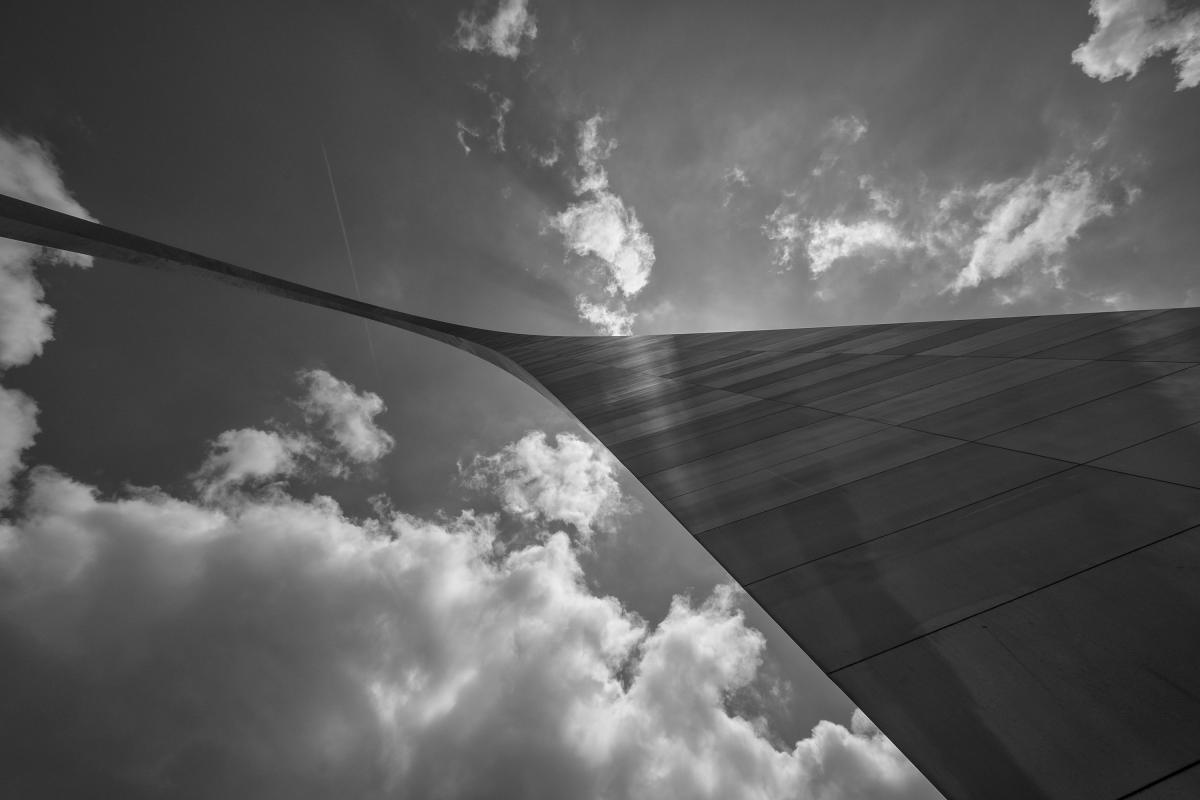
Not really sure if Modern Architecture is where this belongs, but it's the best fit out of the current topics! Gateway Arch, St. Louis, MO. June, 2015. www.orendarling.com Fuji X-T1, XF 10-24mm @ 10mm, f/11, 1/1000s, ISO 200.

- 32 replies
-
- 6
-
-
- architecture
- modern
- (and 2 more)
-
I have 3 copies of the Helios 44-2 that I love. One I've reversed the front element on as just a playful "special effects" lens. Of the other two, I prefer my "zebra" copy, but both are good. One thing that you should note if the Helios intrigues you is that quality control on the manufacturing for these was always a bit sloppy. The best strategy for getting a good one is to: 1. Always buy from sellers with great eBay ratings. 2. Be patient, there are tons of these listed every day on eBay. Don't feel like you've got to buy one right now the first time you browse. That can be a recipe for overspending. 3. Always confirm condition (no oil on aperture blades, no fungus, etc.) through a question to the seller. 4. In my opinion, the older the better with the Helios lenses, but balance that with condition. 5. My strategy was to buy 3 and be happy if one of them was really good. Luck was on my side and 2 were great, 1 was OK. Also note that the swirly bokeh can be cool, but don't expect to put that lens on your camera and start taking a ton of crazy bokeh shots right away. Certain backgrounds, light, and other factors influence whether or not you get the swirly bokeh with a Helios. That being said, the bokeh on these lenses at f/2 is simply outstanding if you get a good copy, whether it swirls or not.
-
Just make sure you emphasize that it was on sale and you got such a good deal that you couldn't pass it up! I have all the lenses I need for now, but it's taking some serious willpower to not buy the 16mm. In preparation for my eventual breakdown and purchase of that lens, I bought my wife an X-E1 and put a 27mm on it. Fits in her purse and it's a serious upgrade on the crappy camera on her cellphone that she's insisted on using until now. So... that means if anything ever goes wrong with my X-T1, I can use her X-E1 as a backup. Or I can borrow it for street photography. And most importantly, when I do lose control of my willpower and buy the 16mm, I can say "look at the new lens I bought for us!"
-
Sistine Chapel to Tuscany, what would be your 2 lens line up?
Nero replied to ssobers's topic in Fuji X Lenses
I don't know what your lens collection looks like, but I'd at least give some thought to the 35mm instead of the 18-55 and then leave the 56 at home. It gives you a bit more versatility in a fast prime than the 56 and you can zoom with your feet to work around the gaps in focal length from excluding the 18-55. As I stated above, the 10-24mm is a must have for a trip like that. I wouldn't consider the 14mm if the 10-24 is within your budget. -
Sistine Chapel to Tuscany, what would be your 2 lens line up?
Nero replied to ssobers's topic in Fuji X Lenses
For as much as I love my collection of primes, if I were going on a trip where I could only take 2 lenses, it would probably be my 10-24mm and the 18-135mm WR. If you were to only take 1 zoom, it would definitely be the 10-24mm due to the architecture and landscapes on your trip. The image stabilization on both lenses is a big part of my reasoning. Personally, the 10-24mm would be a must have for that trip. As for the 18-135mm, the stabilization is unreal. I took it into Mammoth Cave in Kentucky and was nailing 1/2 second exposures in almost no light. The WR feature is a nice insurance policy against the weather on a trip too. You don't want to arrive and then get timid about a bit of rain. It also has extra reach for detail shots. That being said, it would be so hard for me to go on a trip without my favorite prime. If you can't leave it behind, take your favorite prime and the 10-24mm. If there was a way to sneak the tiny 27mm into my bag as a third lens for street photos, I'd do that too. It weighs nothing, takes no space, and makes the X-T1 look almost like a point and shoot on the streets. -
Good to know that they seem to have fixed the screen tilting issue! That would have greatly simplified my choice when I was looking to buy a half case!